Pectin Methylesterase Orange Juice: Specification Checklist for Juice Processing
Compare PME enzyme specs for orange juice and juice processing: pH, temperature, dosage, COA/TDS/SDS, pilot validation, QC, and cost-in-use.
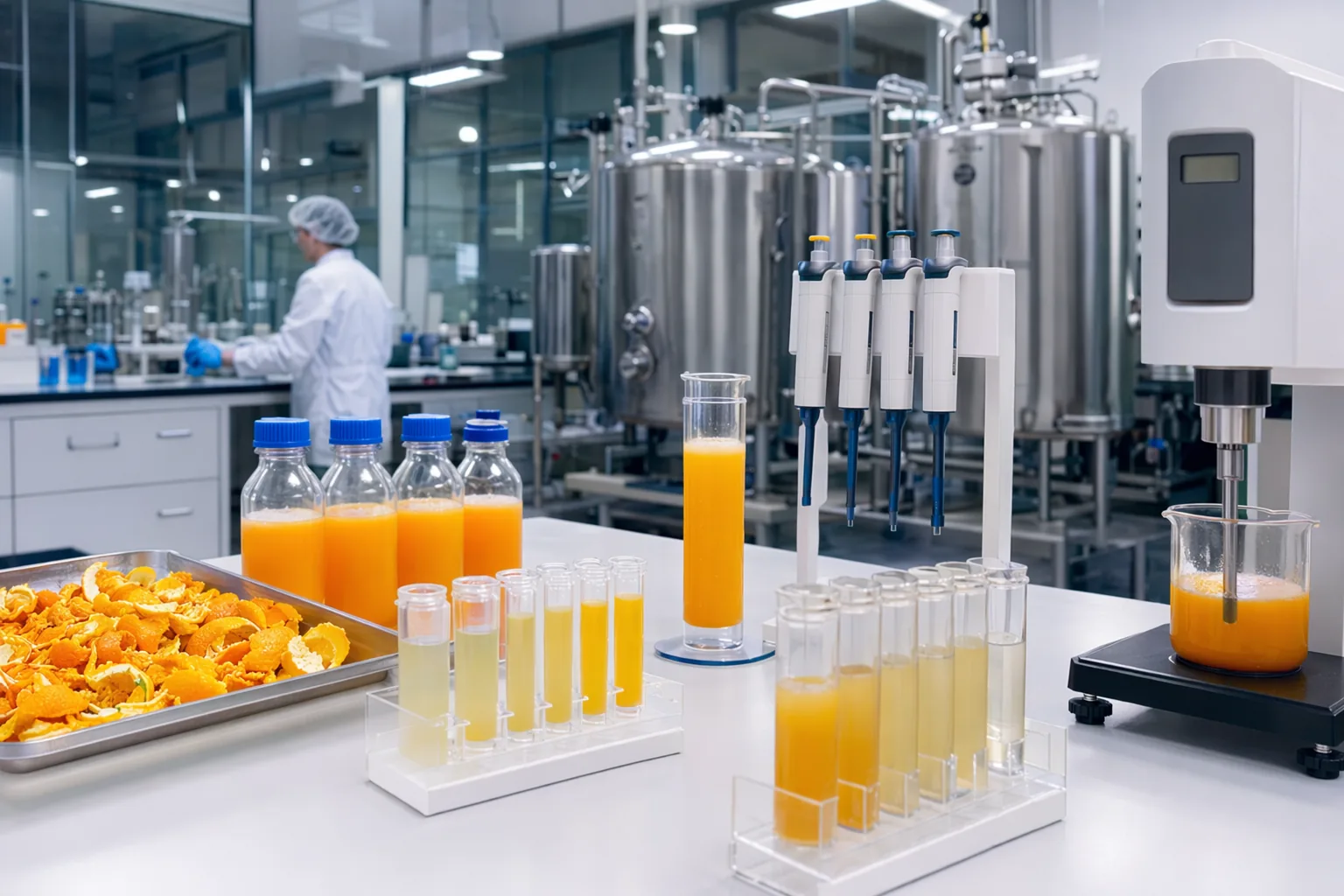
For industrial juice processors, pectin methylesterase selection is not just an activity number. It is a process-fit decision involving cloud stability, viscosity, clarification targets, heat load, QC release, and supplier reliability.
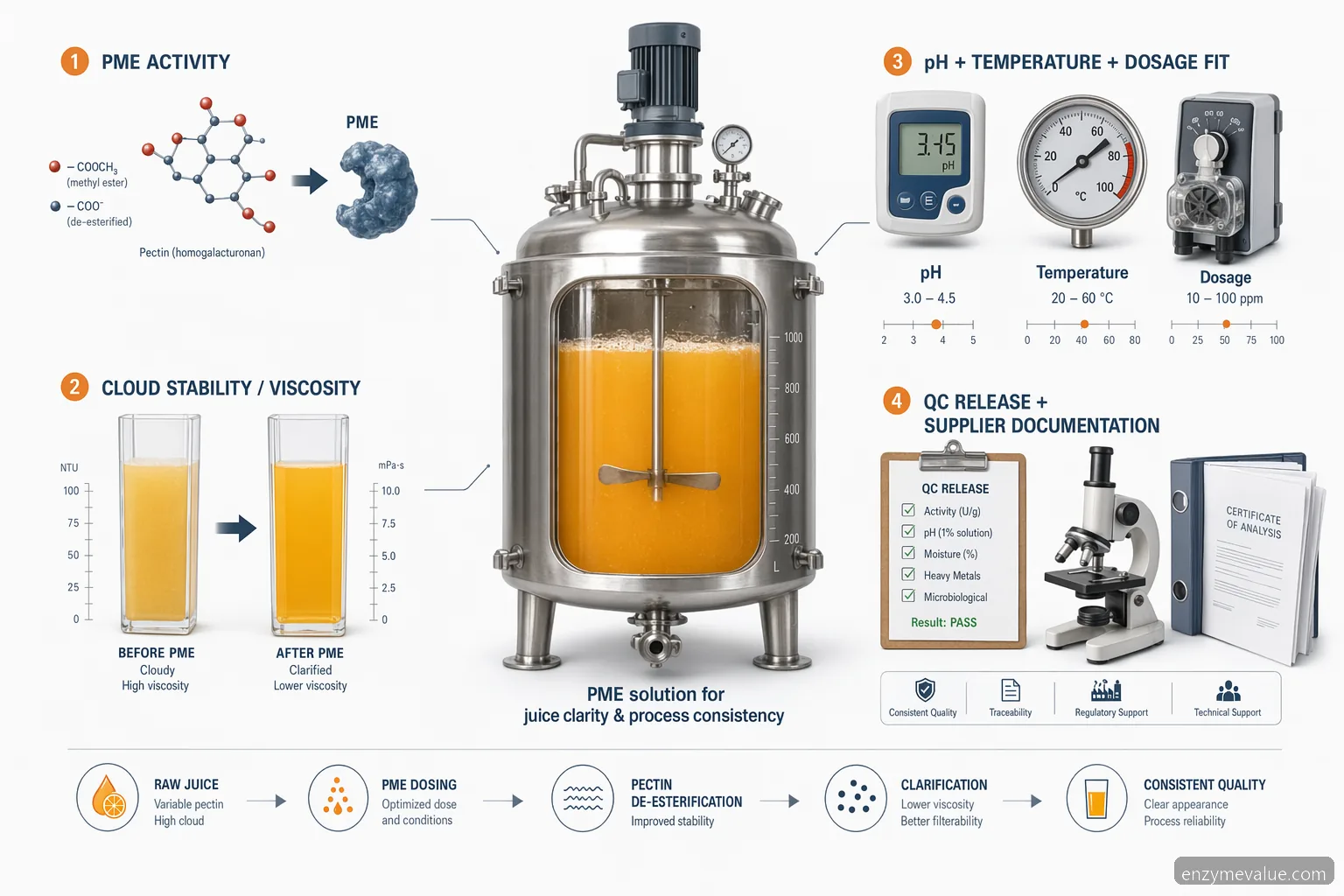
Why PME behaves differently in orange juice
Pectin methylesterase, also called PME enzyme, pectin esterase, or de-esterification enzyme, removes methyl ester groups from pectin. In pectin methylesterase orange juice applications, this chemistry can have opposite commercial outcomes. For cloudy orange juice, active endogenous PME can de-esterify soluble pectin, promote calcium pectate formation, and contribute to cloud loss or serum separation. In clarified juice processing, controlled PME activity may help prepare pectin for downstream depolymerization when used with other pectinolytic enzymes. This is why the first comparison point is not the highest activity, but the process objective. A supplier should understand whether you need cloud protection, clarification, pulp viscosity reduction, peel treatment, or a tailored pectin modification step. For many orange juice lines, thermal control and enzyme inactivation are as important as exogenous enzyme addition.
Cloudy juice objective: minimize residual PME activity after processing. • Clarified juice objective: use PME with compatible pectinases under controlled conditions. • Peel objective: modify pectin structure for extraction, texture, or downstream conversion.
Compare pH, temperature, and dosage fit before price
A practical specification for pectin methylesterase in orange juice should start with the operating window. Orange juice commonly sits around pH 3.3 to 4.2, while tomato juice is often near pH 4.0 to 4.5, and pear juice varies by cultivar and blending. Ask whether the PME activity was measured at a pH relevant to your juice, not only at the supplier’s preferred assay pH. Typical screening trials may test 25 to 55 °C with short holding times, while heat-inactivation studies often examine higher temperatures depending on product quality limits. Initial industrial trial dosage can be bracketed broadly, for example 10 to 200 ppm liquid enzyme preparation or an equivalent activity-based dose, then narrowed by response. The best pectin methylesterase supplier for juice processing will recommend a small factorial trial rather than a single universal dosage.
Confirm assay pH, assay temperature, and activity unit definition. • Bracket dosage by activity units and by product weight. • Record viscosity, turbidity, cloud stability, and yield response.
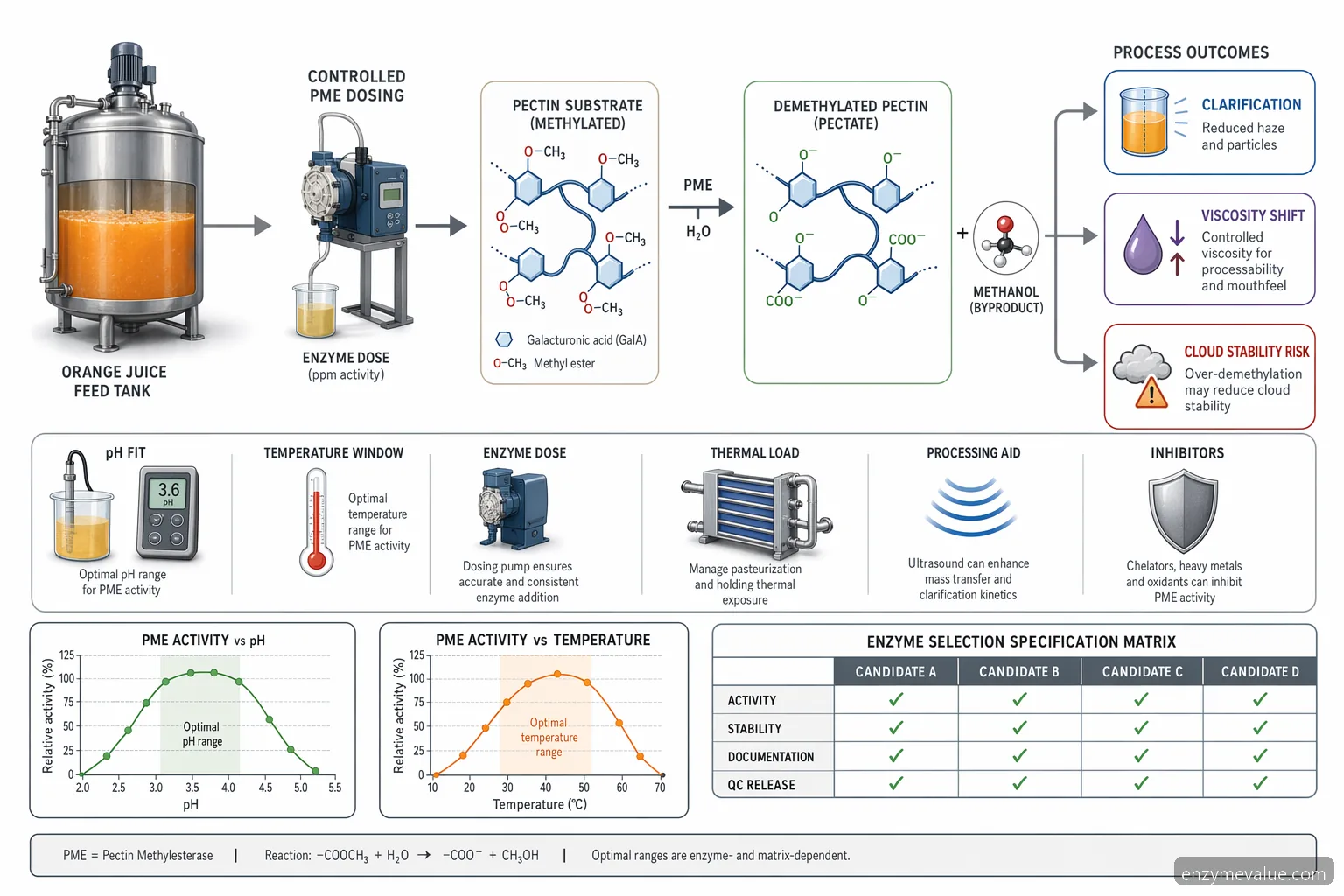
PME alone versus PME with other pectinases
For comparison buying, separate PME functionality from complete pectinase blends. PME demethylesterifies pectin; it does not by itself depolymerize the pectin backbone in the same way as polygalacturonase or pectin lyase. In clarified juice, pectin methylesterase and polygalacturonase pear juice systems may be evaluated together because PME can create more suitable substrate regions for polygalacturonase, depending on pectin structure and calcium level. In orange and citrus matrices, a blend may improve clarification, pressability, or peel slurry handling, but can also over-process texture or destabilize cloud if applied to the wrong product stream. For tomato juice, pectin methylesterase in tomato juice may be relevant to viscosity and consistency control, especially where calcium-mediated structure is important. Request side-activity profiles so you can compare a single de-esterification enzyme with a broader pectinase preparation.
PME: controls degree of methyl esterification. • Polygalacturonase: reduces pectin chain length after suitable access. • Pectin lyase: can cleave highly esterified pectin under specific conditions. • Blend selection should match cloudy, clarified, puree, or peel objectives.
Thermal process, ultrasound, and inhibitor considerations
Industrial pectin methylesterase juice processing must account for inactivation behavior. Endogenous orange PME can be relatively heat resistant compared with many quality-sensitive juice components, so processors often balance enzyme control against flavor, color, and vitamin retention targets. Literature on the combined effect of ultrasound and heat on orange pectin methylesterase is relevant for process development, but it should not be converted directly into a commercial claim without plant validation. Ultrasound, high-pressure, pulsed electric field, and heat-assisted approaches may change inactivation kinetics depending on juice composition, pulp level, and equipment geometry. A pectin methylesterase inhibitor may be discussed in R&D contexts, but for B2B procurement it is usually not a drop-in substitute for validated process control. Require suppliers to disclose recommended inactivation conditions for the exact enzyme preparation, then verify residual PME activity after your actual hold tube, tank, or pasteurizer sequence.
Measure residual PME, not only pasteurizer setpoint. • Validate after filling or storage if cloud stability is critical. • Do not assume published orange juice kinetics match your plant.
Documentation, QC release, and supplier qualification
A buyer-ready PME comparison should include documentation before samples enter pilot work. Request a current COA for each lot, a TDS describing activity, carrier, storage, shelf life, solubility, and recommended use, and an SDS for handling and worker safety review. For food applications, also ask for origin, production organism information, allergen statements where applicable, and regulatory suitability for your market; avoid accepting vague claims without supporting documents. QC checks should include incoming activity verification or supplier trend data, microbiological limits suitable for your process, appearance, odor, and storage temperature compliance. Supplier qualification should evaluate technical support, change-notification practice, lead time, batch traceability, and sample-to-commercial consistency. Finally, compare cost-in-use using verified dosage and yield impact from pilot validation, not the enzyme price alone.
COA confirms lot-specific release data. • TDS supports process design and storage control. • SDS supports safe handling and internal EHS review. • Pilot validation converts enzyme price into cost-in-use.
Technical Buying Checklist
Buyer Questions
It depends on the product target. In cloudy orange juice, uncontrolled PME activity can reduce cloud stability by de-esterifying pectin and encouraging calcium pectate aggregation. In clarified juice, pulp treatment, or citrus peel processing, controlled PME may be useful when paired with the right pectinase system. Buyers should define whether the goal is cloud protection, clarification, viscosity adjustment, or pectin modification before selecting an enzyme.
Ask for a COA, TDS, SDS, activity unit definition, pH and temperature profile, side-activity data, recommended dosage range, storage conditions, shelf life, and lot traceability. For food processing, also request origin and regulatory suitability information for your market. A qualified supplier should support pilot validation and explain how to convert dosage into cost-in-use under your process conditions.
Yes, but the combination must match the juice and quality target. PME reduces pectin methyl esterification, while polygalacturonase can depolymerize suitable pectin regions. This pairing may support clarification or viscosity reduction in pear, apple, citrus, or tomato streams. However, in cloudy orange juice, excessive or misplaced pectinase activity may destabilize cloud, so trials should measure turbidity, viscosity, cloud stability, and residual activity.
A practical screening study often tests the real juice matrix at its natural pH, such as about pH 3.3 to 4.2 for orange juice, across moderate temperatures such as 25 to 55 °C. Dosage may be bracketed on an activity basis or as preparation ppm, then narrowed by performance. Final conditions should be validated with plant residence time, pulp level, calcium content, and pasteurization sequence.
Do not compare only price per kilogram or quoted activity. Normalize by activity unit definition, effective dosage in your juice, processing time, yield or filtration benefit, quality impact, storage stability, and waste reduction. Include supplier qualification factors such as documentation quality, lead time, batch consistency, technical support, and change notification. The lowest unit price may not deliver the lowest cost-in-use.
Related Search Themes
pectin methylesterase in orange juice, pectin methylesterase supplier for juice processing, pectin methylesterase in tomato juice, pectin methylesterase for juice processing, pectin methylesterase and polygalacturonase pear juice, industrial pectin methylesterase juice processing
Pectin Methylesterase (PME) for Research & Industry
Need Pectin Methylesterase (PME) for your lab or production process?
ISO 9001 certified · Food-grade & research-grade · Ships to 80+ countries
Frequently Asked Questions
Is pectin methylesterase good or bad in orange juice?
It depends on the product target. In cloudy orange juice, uncontrolled PME activity can reduce cloud stability by de-esterifying pectin and encouraging calcium pectate aggregation. In clarified juice, pulp treatment, or citrus peel processing, controlled PME may be useful when paired with the right pectinase system. Buyers should define whether the goal is cloud protection, clarification, viscosity adjustment, or pectin modification before selecting an enzyme.
What should I ask a pectin methylesterase supplier for juice processing?
Ask for a COA, TDS, SDS, activity unit definition, pH and temperature profile, side-activity data, recommended dosage range, storage conditions, shelf life, and lot traceability. For food processing, also request origin and regulatory suitability information for your market. A qualified supplier should support pilot validation and explain how to convert dosage into cost-in-use under your process conditions.
Can PME be used with polygalacturonase in juice processing?
Yes, but the combination must match the juice and quality target. PME reduces pectin methyl esterification, while polygalacturonase can depolymerize suitable pectin regions. This pairing may support clarification or viscosity reduction in pear, apple, citrus, or tomato streams. However, in cloudy orange juice, excessive or misplaced pectinase activity may destabilize cloud, so trials should measure turbidity, viscosity, cloud stability, and residual activity.
What process conditions are typical for PME trials in juice?
A practical screening study often tests the real juice matrix at its natural pH, such as about pH 3.3 to 4.2 for orange juice, across moderate temperatures such as 25 to 55 °C. Dosage may be bracketed on an activity basis or as preparation ppm, then narrowed by performance. Final conditions should be validated with plant residence time, pulp level, calcium content, and pasteurization sequence.
How do I compare PME cost between suppliers?
Do not compare only price per kilogram or quoted activity. Normalize by activity unit definition, effective dosage in your juice, processing time, yield or filtration benefit, quality impact, storage stability, and waste reduction. Include supplier qualification factors such as documentation quality, lead time, batch consistency, technical support, and change notification. The lowest unit price may not deliver the lowest cost-in-use.
Related: Pectin Methylesterase for Better Texture Control
Turn This Guide Into a Supplier Brief Request a PME specification review and pilot-trial plan for your juice processing line. See our application page for Pectin Methylesterase for Better Texture Control at /applications/pectin-methylesterase-optimum/ for specs, MOQ, and a free 50 g sample.
Contact Us to Contribute