Pectin Methylesterase Application: How to Use PME in Juice Processing Formulations
Formulation guide for pectin methylesterase application in juice: dosage, pH, temperature, QC, pilot validation, COA/TDS/SDS.
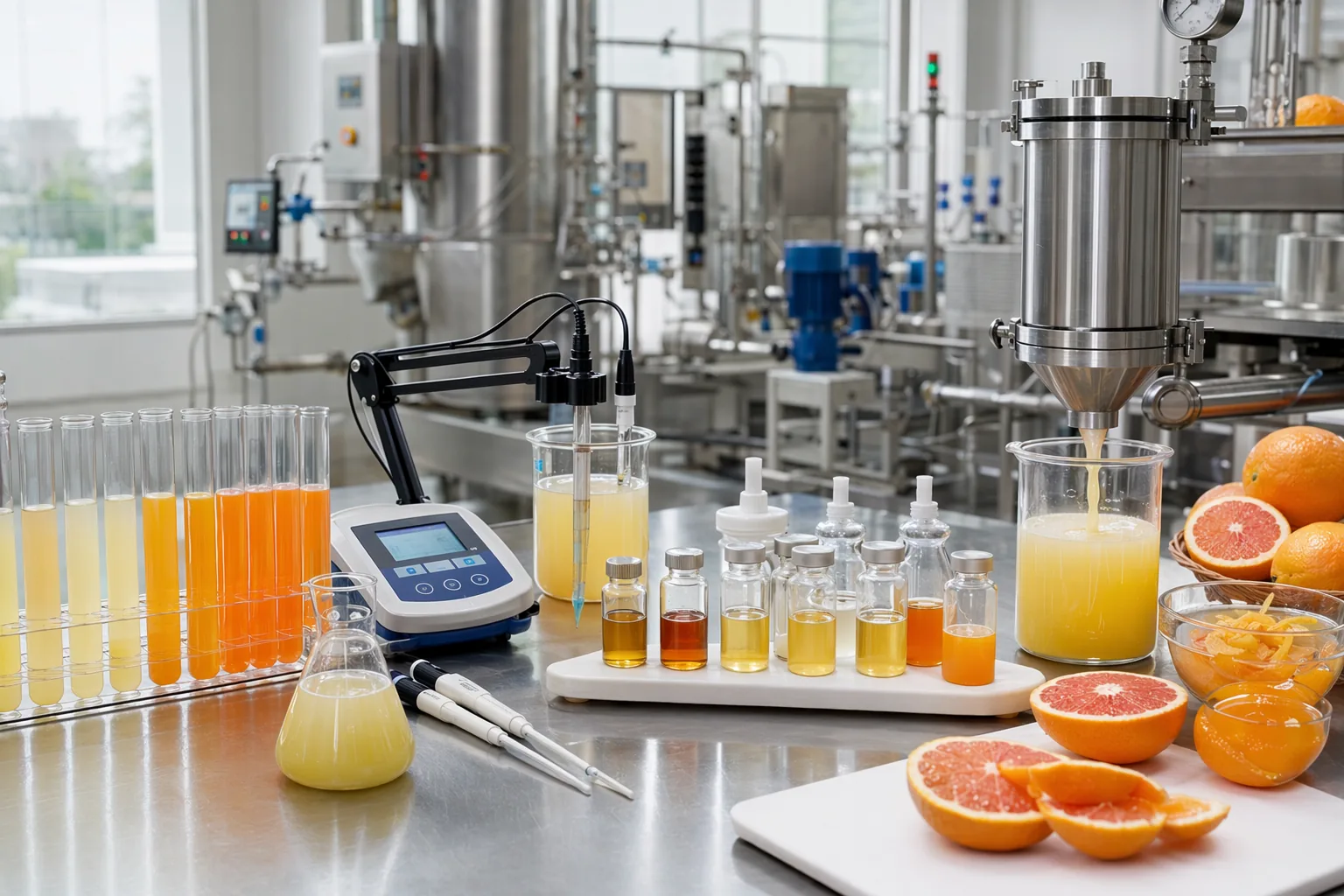
A practical B2B formulation guide for using pectin methylesterase in juice processing, from enzyme selection and dosage screening to QC, pilot trials, and supplier qualification.
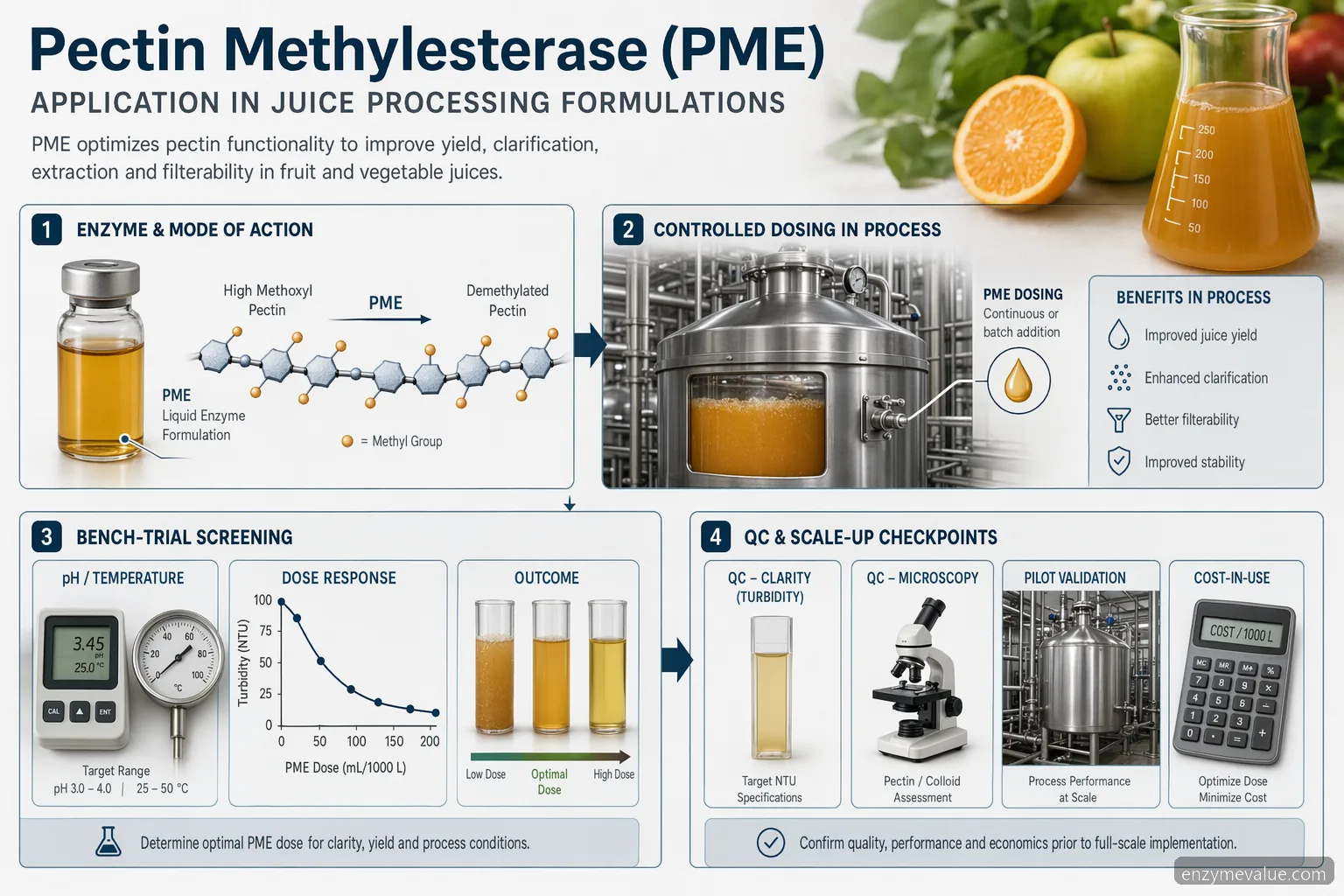
What Is Pectin Methylesterase in Food Processing?
Pectin methylesterase, also called PME enzyme, pectin esterase, or a de-esterification enzyme, catalyzes removal of methyl ester groups from pectin. In fruit juice systems, this changes the charge and calcium-binding behavior of pectin, which can affect cloud stability, clarification, viscosity, filtration rate, and texture. The pectin methylesterase function is not simply to “break down” pectin; it modifies pectin so that downstream enzymes, calcium, heat, or separation steps behave differently. In juice processing, PME may be deliberately added for controlled pectin modification, or endogenous PME may need to be managed in citrus juices such as orange juice to prevent unwanted cloud loss. Industrial buyers should evaluate the enzyme as a process aid within a defined formulation window, not as a generic additive. The correct choice depends on juice type, target appearance, hold time, equipment, and required finished-product attributes.
Common names: pectin methylesterase, PME enzyme, pectin esterase • Main action: pectin de-esterification, not complete pectin depolymerization • Key outcomes: viscosity shift, calcium sensitivity, clarification behavior • Typical users: juice, jam, fruit preparation, and citrus peel processors
Pectin Methylesterase Application in Juice Formulations
A practical pectin methylesterase application starts with the desired product target. For clear juice, PME may be combined with polygalacturonase or pectin lyase programs to improve depectinization and separation. For pulpy or cloudy juice, the objective may be different: controlling endogenous PME inactivation, avoiding calcium pectate haze, or creating a defined mouthfeel. In citrus systems, pectin methylesterase in orange juice is especially important because native PME can destabilize cloud if time, temperature, and calcium conditions allow demethylated pectin to aggregate. For industrial formulation work, define the juice matrix first: soluble solids, pH, pulp level, pectin content, calcium level, prior heat treatment, and target turbidity. Then select a food-grade enzyme preparation with documented activity and run bench tests at multiple enzyme dosages and contact times. The best result is the lowest dosage that consistently meets process and finished-product specifications.
Clarification target: reduced pectin test response and improved filtration • Cloudy juice target: controlled PME activity or enzyme inactivation strategy • Formulation variables: Brix, pH, calcium, pulp, and pectin load • Scale-up rule: validate enzyme action in real juice, not only buffer systems
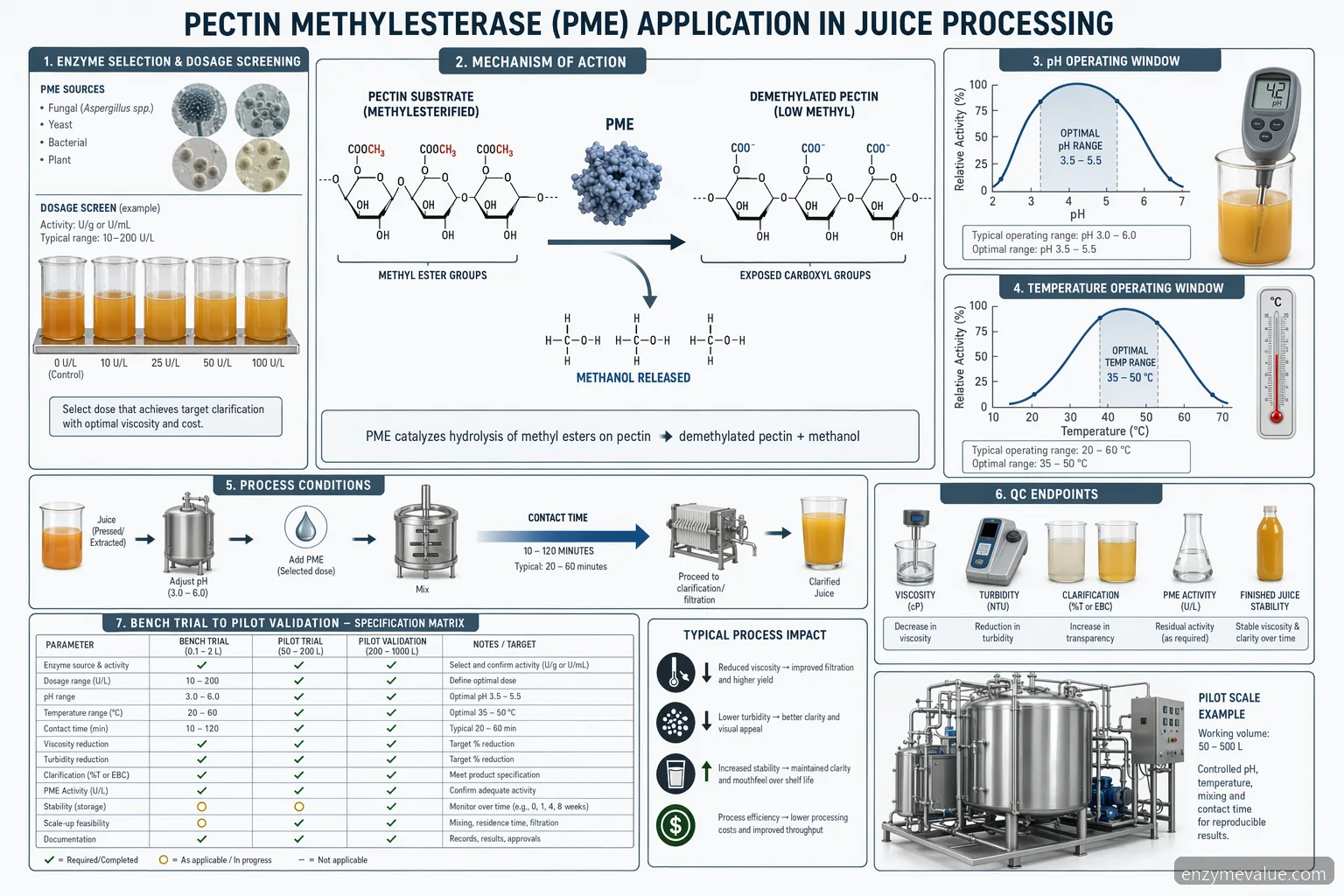
Recommended Process Conditions for Bench Trials
Because enzyme preparations vary by microbial source, concentration, stabilizers, and activity method, the supplier TDS should be the controlling document. As a safe screening range, many juice formulators begin near pH 3.0–5.0 and 35–55°C, then narrow the window based on activity, flavor protection, and microbial controls. Initial dosage trials may use 10–100 PME units per kilogram of juice, or approximately 0.01–0.10% w/w of a commercial liquid enzyme when activity units are not yet normalized. Contact times of 15–90 minutes are common for screening, followed by heat inactivation or downstream processing as required by the product design. Avoid assuming that higher dosage is better; excessive de-esterification can increase calcium-driven aggregation, sediment, or loss of cloud. Run trials with the actual juice lot, including normal pulp level and soluble solids, because pectin structure and mineral content strongly influence results.
Screen pH: commonly 3.0–5.0, depending on enzyme source and juice • Screen temperature: commonly 35–55°C where product quality allows • Screen contact time: 15–90 minutes before inactivation or separation • Start low and optimize to cost-in-use, not maximum enzyme activity
QC Checks: Assay, Pectin Response, and Finished Juice Tests
A reliable pectin methylesterase assay is essential for comparing lots and calculating dosage. Common methods include pH-stat titration of released carboxyl groups, acid-base titration, or validated internal methods referenced on the COA. For process control, pair the enzyme activity assay with juice-specific tests: alcohol precipitation for residual pectin, viscosity, turbidity or cloud value, centrifuge sediment, filterability, and calcium sensitivity. In orange juice and other cloudy systems, monitor cloud stability during accelerated holding as well as normal shelf-life conditions. If a pectin methylesterase inhibitor strategy is being evaluated to manage native PME, confirm performance against the plant’s actual heat treatment and juice chemistry rather than relying on literature values. Finished juice should also be checked for sensory impact, color shift, soluble solids, pH drift, and any sediment formation after storage. QC limits should be written before pilot production begins.
Activity control: pH-stat or validated titration method • Process checks: pectin test, viscosity, turbidity, filterability • Cloud checks: centrifuge sediment and accelerated storage • Release criteria: align enzyme results with finished-product specifications
Pilot Validation and Scale-Up Considerations
Pilot validation converts bench performance into a controlled manufacturing procedure. Hold tank geometry, mixing intensity, dosing point, juice temperature distribution, and residence time can all change the application of pectin methylesterase. Add the enzyme where it can disperse quickly, avoid dead zones, and confirm that the entire batch reaches the target temperature and pH window. If heat inactivation is required, validate the thermal step against residual PME activity, not only outlet temperature. For continuous processes, calculate residence time distribution and confirm that short-path material receives enough enzyme contact. For batch processes, document addition sequence, agitation speed, start and stop times, and sampling points. Pilot lots should include normal raw material variability, especially fruit maturity and pectin load. The scale-up decision should be based on product quality, process throughput, enzyme cost-in-use, and repeatability across at least several representative juice lots.
Validate mixing, residence time, and heat inactivation • Confirm performance across real raw material variability • Use residual activity and finished-juice data for scale-up approval • Document dosing point, agitation, contact time, and sampling plan
Supplier Qualification and Cost-in-Use
For B2B procurement, the lowest price per kilogram rarely indicates the best PME enzyme. Compare suppliers using activity-normalized cost-in-use, performance at your juice pH, batch consistency, lead time, documentation quality, and technical support. Request a current COA for each lot, a TDS with activity definition and recommended conditions, and an SDS covering handling, storage, and spill response. Also ask for shelf-life, storage temperature, carrier or diluent information, allergen and processing-aid statements where relevant, and any food regulatory documentation required for your market. Do not rely on unverifiable claims or generic enzyme descriptions. A qualified supplier should support pilot validation, provide lot-to-lot activity limits, and help translate laboratory dosage into plant-scale dosing. Build procurement specifications around enzyme activity, acceptable physical form, microbiological limits where applicable, packaging, storage, and documentation requirements.
Request COA, TDS, SDS, activity method, and storage guidance • Compare cost per treated metric ton of juice, not only enzyme price • Confirm lead time, packaging, batch consistency, and technical support • Qualify suppliers through pilot results and repeatable QC data
Technical Buying Checklist
Buyer Questions
Pectin methylesterase is an enzyme that removes methyl ester groups from pectin. In juice processing, this de-esterification changes how pectin interacts with calcium, water, and other enzymes. Depending on the formulation target, it can support clarification, modify viscosity, or help control cloud behavior. Its effect depends strongly on pH, temperature, pectin structure, calcium level, and contact time.
A practical bench-trial starting point is 10–100 PME units per kilogram of juice, if the supplier provides a clear activity definition. For commercial liquid preparations, early screening may also use about 0.01–0.10% w/w, then convert to activity-normalized dosage. The final dosage should be selected from pilot data, finished-juice quality, process time, and cost-in-use.
Orange juice often contains native PME that can reduce cloud stability when demethylated pectin reacts with calcium and forms aggregates. Therefore, formulators may need either controlled PME use for a defined process purpose or effective inactivation of endogenous PME for cloudy juice stability. Trials should measure cloud value, sediment, residual activity, and storage behavior under the plant’s normal thermal and handling conditions.
Use the pectin methylesterase assay to confirm incoming enzyme activity, compare supplier lots, and verify residual activity after processing or inactivation. Common approaches include pH-stat titration or validated acid-base titration that tracks carboxyl group formation. For release decisions, combine assay data with juice-specific results such as viscosity, turbidity, pectin precipitation, filterability, sediment, and sensory checks.
A pectin methylesterase inhibitor may be considered when the goal is to manage native PME activity, especially in citrus systems, but commercial feasibility depends on regulatory status, sensory impact, heat process compatibility, and supplier documentation. Many processors instead rely on validated thermal inactivation and tight process control. Any inhibitor approach should be tested against the actual juice matrix and finished-product specifications.
Request a lot-specific COA, a TDS with activity definition and recommended pH and temperature conditions, and an SDS for safe handling. Also ask for storage conditions, shelf-life, carrier information, packaging options, allergen or processing statements where relevant, and applicable food-use documentation for your market. Supplier qualification should include pilot validation, cost-in-use comparison, and batch-to-batch consistency review.
Pectin Methylesterase (PME) for Research & Industry
Need Pectin Methylesterase (PME) for your lab or production process?
ISO 9001 certified · Food-grade & research-grade · Ships to 80+ countries
Frequently Asked Questions
What is pectin methylesterase and why is it used in juice processing?
Pectin methylesterase is an enzyme that removes methyl ester groups from pectin. In juice processing, this de-esterification changes how pectin interacts with calcium, water, and other enzymes. Depending on the formulation target, it can support clarification, modify viscosity, or help control cloud behavior. Its effect depends strongly on pH, temperature, pectin structure, calcium level, and contact time.
What is a practical starting dosage for pectin methylesterase application?
A practical bench-trial starting point is 10–100 PME units per kilogram of juice, if the supplier provides a clear activity definition. For commercial liquid preparations, early screening may also use about 0.01–0.10% w/w, then convert to activity-normalized dosage. The final dosage should be selected from pilot data, finished-juice quality, process time, and cost-in-use.
How is pectin methylesterase in orange juice different from other juice systems?
Orange juice often contains native PME that can reduce cloud stability when demethylated pectin reacts with calcium and forms aggregates. Therefore, formulators may need either controlled PME use for a defined process purpose or effective inactivation of endogenous PME for cloudy juice stability. Trials should measure cloud value, sediment, residual activity, and storage behavior under the plant’s normal thermal and handling conditions.
How should a pectin methylesterase assay be used for QC?
Use the pectin methylesterase assay to confirm incoming enzyme activity, compare supplier lots, and verify residual activity after processing or inactivation. Common approaches include pH-stat titration or validated acid-base titration that tracks carboxyl group formation. For release decisions, combine assay data with juice-specific results such as viscosity, turbidity, pectin precipitation, filterability, sediment, and sensory checks.
Is a pectin methylesterase inhibitor used in juice formulation?
A pectin methylesterase inhibitor may be considered when the goal is to manage native PME activity, especially in citrus systems, but commercial feasibility depends on regulatory status, sensory impact, heat process compatibility, and supplier documentation. Many processors instead rely on validated thermal inactivation and tight process control. Any inhibitor approach should be tested against the actual juice matrix and finished-product specifications.
What should industrial buyers request from a PME enzyme supplier?
Request a lot-specific COA, a TDS with activity definition and recommended pH and temperature conditions, and an SDS for safe handling. Also ask for storage conditions, shelf-life, carrier information, packaging options, allergen or processing statements where relevant, and applicable food-use documentation for your market. Supplier qualification should include pilot validation, cost-in-use comparison, and batch-to-batch consistency review.
Related: Pectin Methylesterase for Better Texture Control
Turn This Guide Into a Supplier Brief Request a PME formulation review with COA/TDS/SDS support, pilot-trial guidance, and cost-in-use evaluation for your juice process. See our application page for Pectin Methylesterase for Better Texture Control at /applications/pectin-methylesterase-optimum/ for specs, MOQ, and a free 50 g sample.
Contact Us to Contribute