Application Of Pectin Methylesterase: Specification Checklist for Juice Processing
Compare PME enzyme specs for juice processing: pH, temperature, dosage, assays, COA/TDS/SDS, pilot validation, and cost-in-use checks.
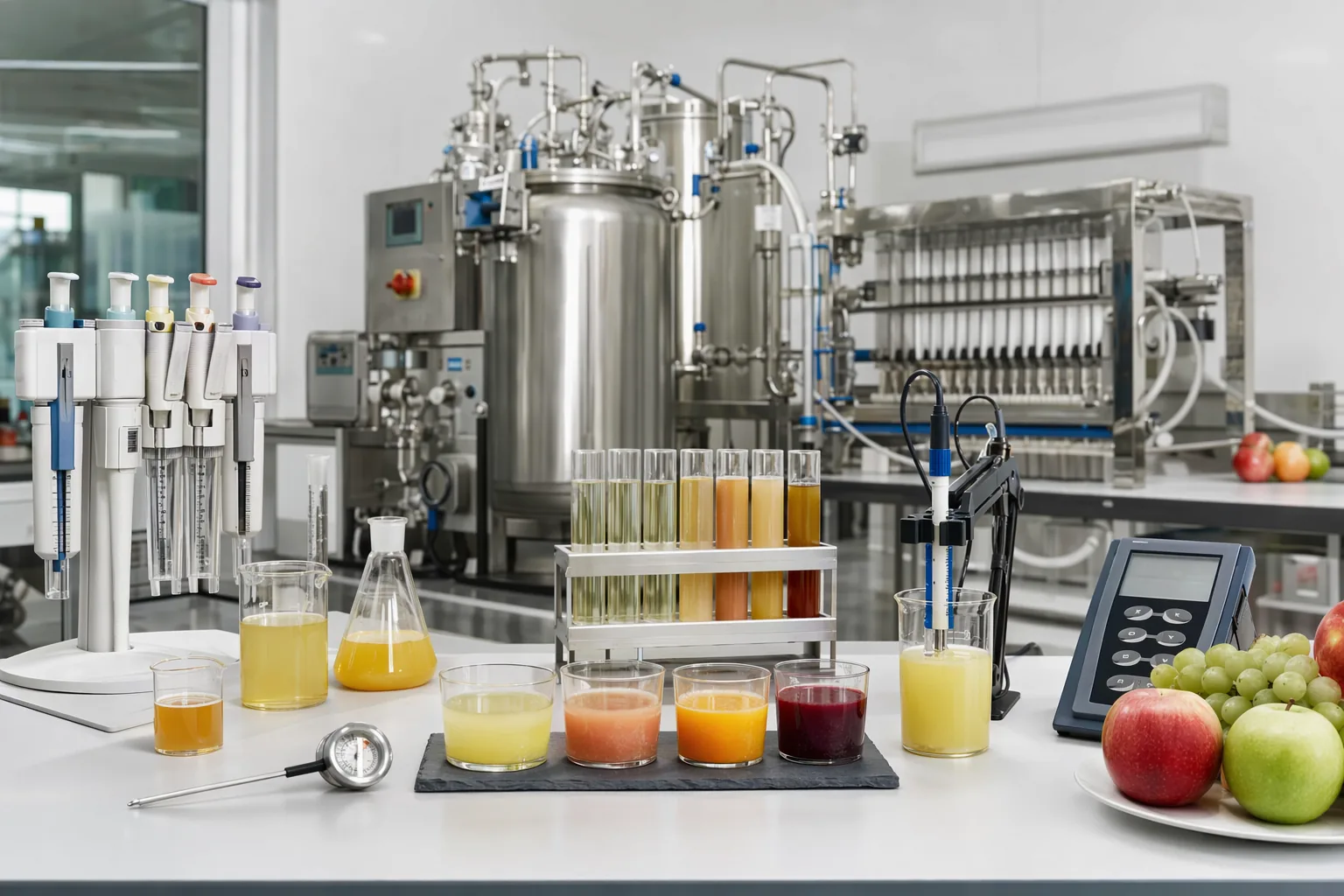
For juice manufacturers, selecting a PME enzyme is not just about activity units. The right pectin methylesterase specification should match fruit type, pH, heat profile, cloud target, clarification goal, and total cost-in-use.
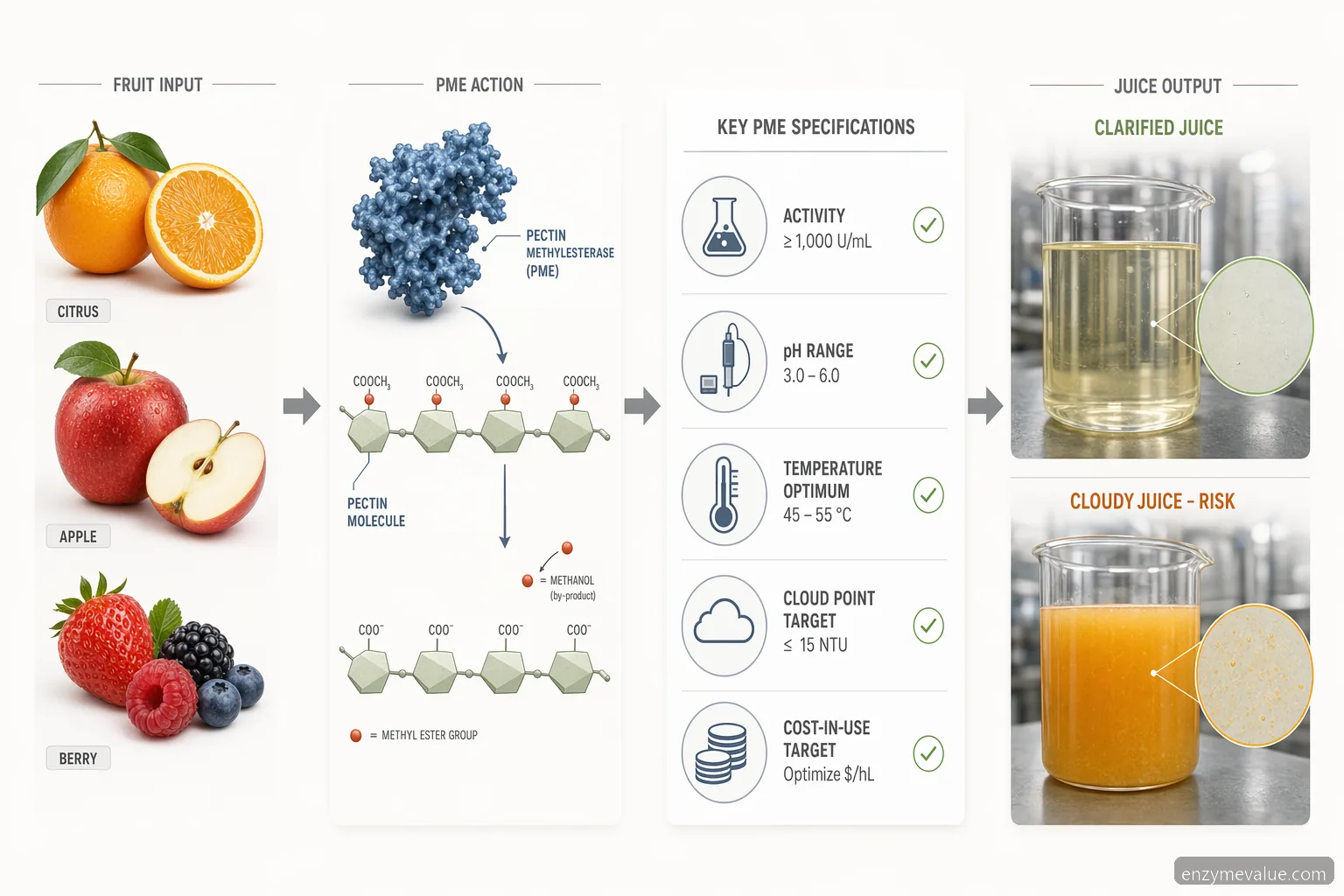
What Is Pectin Methylesterase in Industrial Juice Processing?
Pectin methylesterase, also called PME enzyme or pectin esterase, is a de-esterification enzyme that removes methyl ester groups from pectin. In juice processing, this changes pectin charge, calcium reactivity, viscosity, and interaction with other pectolytic enzymes. The application of pectin methylesterase is therefore highly process-dependent. In some citrus systems, uncontrolled native PME may contribute to cloud loss when calcium pectate forms. In other processes, selected PME activity can help prepare pectin for downstream polygalacturonase action, improve clarification, or adjust peel-derived pectin behavior. Buyers should compare commercial PME products by intended use rather than by headline activity alone. A product suitable for citrus peel treatment may not be ideal for orange juice cloud management or clear apple-style juice production. The key question is not only what is pectin methylesterase, but how its function fits your fruit matrix, pH, heat treatment, and separation equipment.
Common names: pectin methylesterase, PME enzyme, pectin esterase • Primary function: de-esterification of pectin • Main buyer concern: predictable impact on viscosity, cloud, and yield
Comparison Criteria for PME Enzyme Specifications
A practical pectin methylesterase specification should let a processor compare performance before running a plant trial. Start with the activity declaration and the pectin methylesterase assay behind it. Activity units can differ by substrate, pH, temperature, titration endpoint, and calculation method, so two products with the same numeric value may not deliver the same process effect. Review recommended pH and temperature ranges against your juice conditions. Many fruit systems operate around pH 3.0 to 4.5, while some industrial enzyme data may be generated closer to neutral pH. Also check whether the formulation contains other pectinases, cellulases, hemicellulases, or stabilizers. These side activities may be useful for clarification but undesirable for a process focused only on controlled de-esterification. For B2B purchasing, ask suppliers to provide a TDS, COA, SDS, storage guidance, shelf-life statement, and batch release criteria.
Compare assay method, not only activity number • Confirm fruit-relevant pH and temperature performance • Check whether side activities are declared • Review COA, TDS, SDS, and batch consistency data
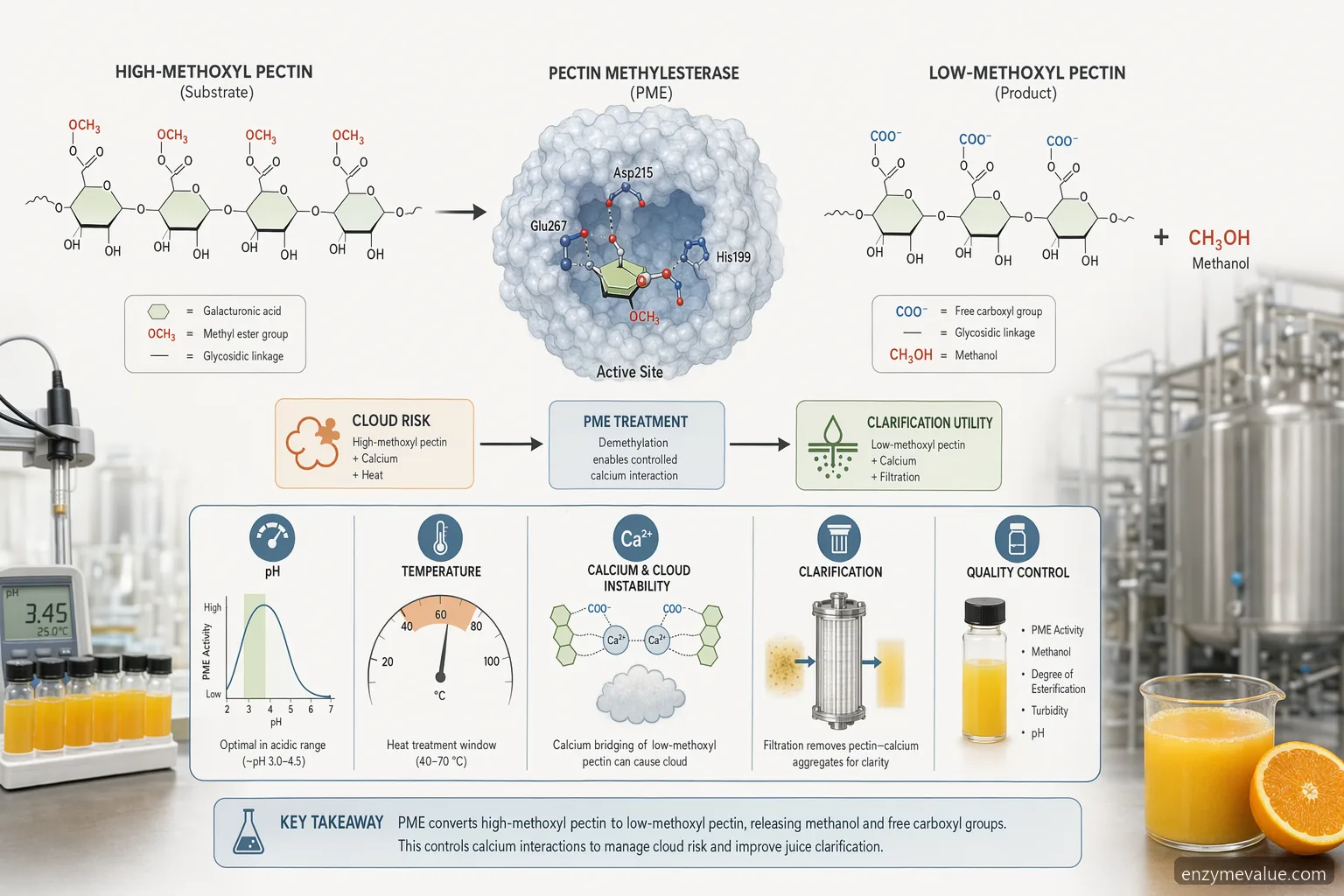
Typical Process Conditions for Juice Trials
Pilot validation should reflect real plant conditions instead of ideal laboratory settings. For juice processing, initial screening often tests pH 3.0 to 4.5, temperatures from 20 to 55°C, and contact times from 15 to 120 minutes, depending on fruit type, residence time, and whether the enzyme is used before clarification, pressing, or filtration. A conservative dosage screen may start around 10 to 200 ppm of formulated enzyme, or the supplier’s equivalent activity-based range, then narrow based on viscosity, turbidity, filterability, and sensory impact. If calcium-assisted pectin modification is part of the process, calcium concentration should be controlled because PME-generated low-methoxyl pectin can react strongly with calcium. Heat inactivation must also be verified. Processors commonly evaluate whether the selected pasteurization or hot-fill step sufficiently stops PME function without damaging target juice quality.
Trial pH: commonly 3.0 to 4.5 for many juices • Trial temperature: often 20 to 55°C, depending on process design • Screen dosage by ppm or declared activity units • Verify enzyme inactivation after the target heat step
PME in Orange Juice: Cloud Risk Versus Process Utility
Pectin methylesterase in orange juice deserves special attention because native PME can influence cloud stability. Orange juice cloud is partly maintained by fine pectin-containing particles. If PME activity creates demethylated pectin that binds calcium, insoluble calcium pectate may form and cloud loss can occur. This is why some processors focus on PME inactivation, while others use controlled enzyme systems in upstream peel, pulp, or by-product applications. When comparing suppliers, ask whether the product is intended for cloudy juice, clarified juice, citrus peel treatment, or general pectin modification. If cloud stability is critical, include accelerated storage, turbidity, serum separation, and residual PME activity in the validation plan. A pectin methylesterase inhibitor may be discussed in academic or ingredient contexts, but industrial juice plants usually manage PME through enzyme selection, dosage control, calcium management, and heat treatment rather than relying on inhibitor claims.
For cloudy citrus juice, residual PME can be a quality risk • For peel or pulp streams, controlled PME may support pectin modification • Include cloud stability and residual activity in QC checks
Quality Control, Cost-in-Use, and Supplier Qualification
The lowest price per kilogram is rarely the best comparison point for a de-esterification enzyme. Cost-in-use should be calculated from effective dosage, activity recovery during storage, required contact time, impact on filtration or centrifugation, yield change, rework risk, and any additional heating needed for inactivation. A qualified supplier should support pilot validation with representative samples, lot-specific COA, current TDS and SDS, clear storage conditions, and transparent assay information. For recurring purchases, define acceptance criteria such as activity range, appearance, microbiological limits where applicable, heavy metal limits where relevant to your market, and packaging integrity. Procurement, R&D, and QA teams should also confirm regulatory suitability for the destination market and intended use. Before scale-up, run a documented plant trial that measures viscosity, turbidity, pectin profile if available, residual activity, sensory quality, throughput, and finished-product stability.
Calculate cost per treated ton, not only enzyme price • Qualify suppliers with documentation and pilot support • Set batch acceptance criteria before repeat purchasing • Confirm regulatory suitability for each destination market
Technical Buying Checklist
Buyer Questions
The main application of pectin methylesterase in juice processing is controlled pectin de-esterification. This can influence viscosity, calcium reactivity, cloud stability, clarification behavior, and downstream pectinase efficiency. The benefit depends on the juice type and process goal. For cloudy citrus juice, uncontrolled PME may be a risk; for clarification or peel streams, selected PME activity can be useful.
Buyers should compare PME enzyme products by assay method, declared activity, working pH, working temperature, side activities, formulation type, inactivation profile, and documentation quality. A meaningful comparison also includes pilot testing under plant conditions. Ask for COA, TDS, SDS, storage instructions, shelf-life information, and technical support for dosage optimization and cost-in-use calculation.
A practical pectin methylesterase trial often screens pH 3.0 to 4.5, temperatures from 20 to 55°C, and contact times from 15 to 120 minutes. Dosage may be tested across supplier-recommended activity levels or approximate formulated-enzyme bands such as 10 to 200 ppm. Final conditions should be based on viscosity, turbidity, filtration rate, yield, sensory quality, and residual activity.
Pectin methylesterase in orange juice can affect cloud stability. When PME demethylates pectin, the modified pectin can interact with calcium and form insoluble calcium pectate, which may contribute to cloud loss or serum separation. For cloudy orange juice, processors usually monitor residual PME activity, turbidity, heat inactivation, and storage stability before approving an enzyme or process change.
A pectin methylesterase inhibitor is discussed in some research and ingredient contexts, but industrial juice processors more commonly manage PME through raw material control, enzyme selection, dosage control, calcium management, residence time, and heat treatment. If an inhibitor approach is proposed, buyers should request evidence under their exact juice conditions, regulatory suitability, and finished-product quality data.
Before scale-up, include a pectin methylesterase assay or residual activity check, viscosity, turbidity, cloud stability, serum separation, filtration or centrifugation performance, pH, calcium level, Brix, sensory review, and microbiological checks where applicable. For procurement control, align these results with supplier COA limits, TDS recommendations, SDS handling guidance, and agreed batch acceptance criteria.
Pectin Methylesterase (PME) for Research & Industry
Need Pectin Methylesterase (PME) for your lab or production process?
ISO 9001 certified · Food-grade & research-grade · Ships to 80+ countries
Frequently Asked Questions
What is the main application of pectin methylesterase in juice processing?
The main application of pectin methylesterase in juice processing is controlled pectin de-esterification. This can influence viscosity, calcium reactivity, cloud stability, clarification behavior, and downstream pectinase efficiency. The benefit depends on the juice type and process goal. For cloudy citrus juice, uncontrolled PME may be a risk; for clarification or peel streams, selected PME activity can be useful.
How should buyers compare PME enzyme products?
Buyers should compare PME enzyme products by assay method, declared activity, working pH, working temperature, side activities, formulation type, inactivation profile, and documentation quality. A meaningful comparison also includes pilot testing under plant conditions. Ask for COA, TDS, SDS, storage instructions, shelf-life information, and technical support for dosage optimization and cost-in-use calculation.
What process conditions are typical for a pectin methylesterase trial?
A practical pectin methylesterase trial often screens pH 3.0 to 4.5, temperatures from 20 to 55°C, and contact times from 15 to 120 minutes. Dosage may be tested across supplier-recommended activity levels or approximate formulated-enzyme bands such as 10 to 200 ppm. Final conditions should be based on viscosity, turbidity, filtration rate, yield, sensory quality, and residual activity.
Why is pectin methylesterase in orange juice a special concern?
Pectin methylesterase in orange juice can affect cloud stability. When PME demethylates pectin, the modified pectin can interact with calcium and form insoluble calcium pectate, which may contribute to cloud loss or serum separation. For cloudy orange juice, processors usually monitor residual PME activity, turbidity, heat inactivation, and storage stability before approving an enzyme or process change.
Is a pectin methylesterase inhibitor needed in industrial juice production?
A pectin methylesterase inhibitor is discussed in some research and ingredient contexts, but industrial juice processors more commonly manage PME through raw material control, enzyme selection, dosage control, calcium management, residence time, and heat treatment. If an inhibitor approach is proposed, buyers should request evidence under their exact juice conditions, regulatory suitability, and finished-product quality data.
What QC checks should be included before scale-up?
Before scale-up, include a pectin methylesterase assay or residual activity check, viscosity, turbidity, cloud stability, serum separation, filtration or centrifugation performance, pH, calcium level, Brix, sensory review, and microbiological checks where applicable. For procurement control, align these results with supplier COA limits, TDS recommendations, SDS handling guidance, and agreed batch acceptance criteria.
Related: Pectin Methylesterase for Better Texture Control
Turn This Guide Into a Supplier Brief Request a PME specification review and pilot-trial dosage plan for your juice process. See our application page for Pectin Methylesterase for Better Texture Control at /applications/pectin-methylesterase-optimum/ for specs, MOQ, and a free 50 g sample.
Contact Us to Contribute