Pectin Methylesterase And Polygalacturonase Pear Juice: Process Guide
Process guide for pectin methylesterase and polygalacturonase in pear juice: dosage, pH, temperature, QC, and supplier checks.
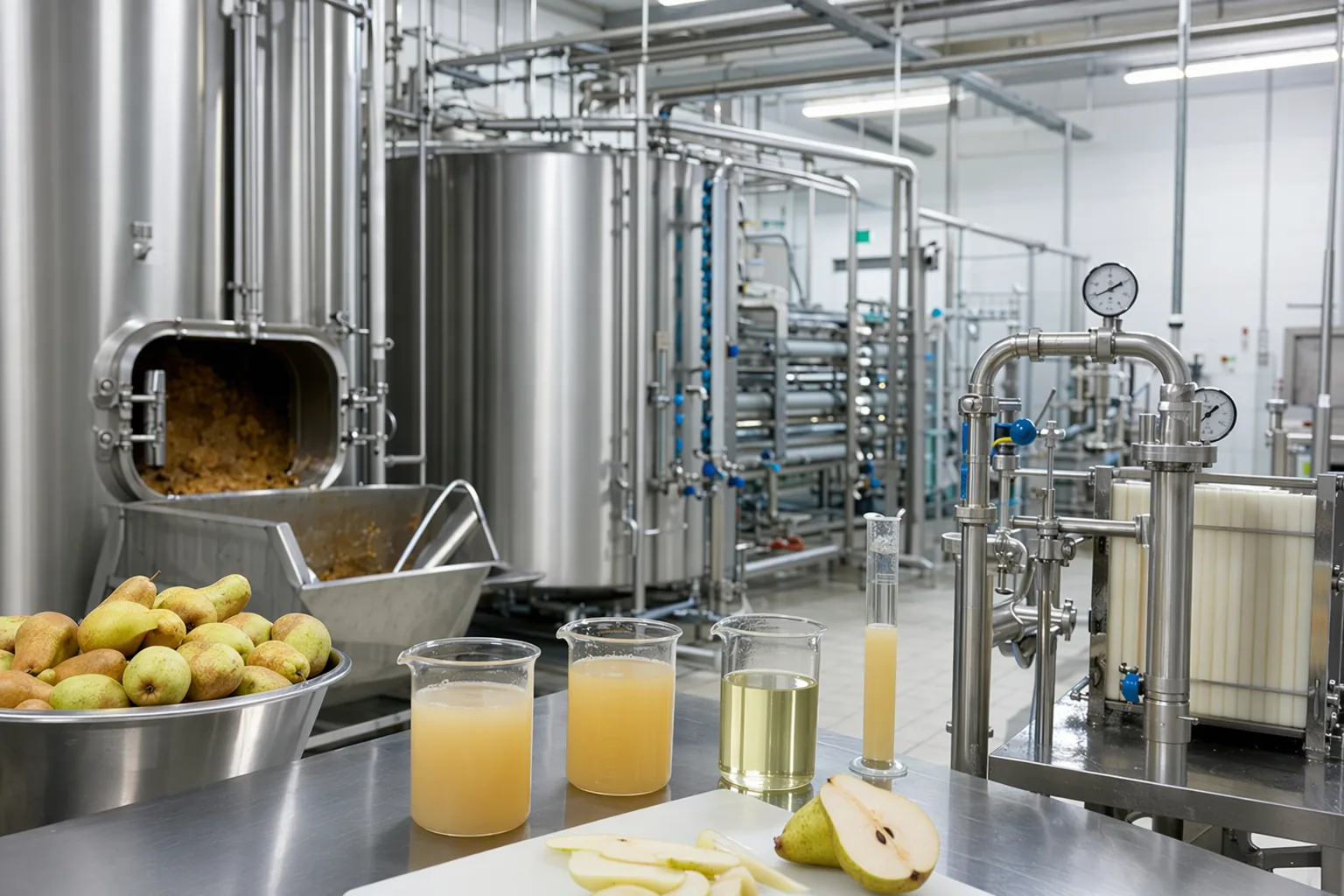
For industrial pear juice processors, controlled pectin methylesterase and polygalacturonase treatment can support lower viscosity, improved pressing, and more predictable clarification when validated under plant conditions.
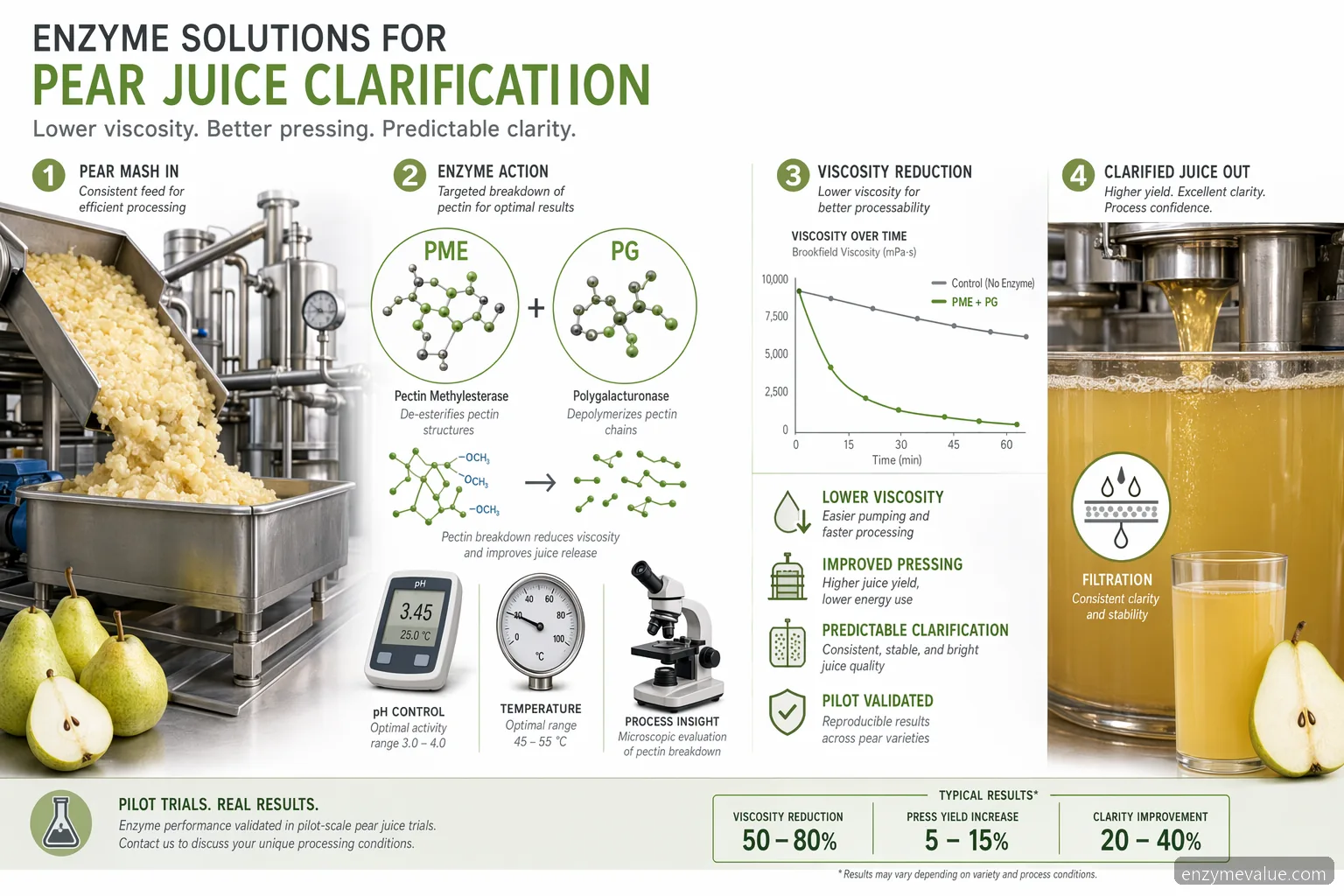
Why PME and PG Are Used in Pear Juice Processing
In pear juice, pectin can hold water, increase mash viscosity, reduce press throughput, and slow clarification. A pectin methylesterase and polygalacturonase pear juice program targets this structure in two steps. The PME enzyme, also called pectin esterase or de-esterification enzyme, removes methyl groups from pectin and creates sites that can be more accessible to polygalacturonase. Polygalacturonase then cleaves the galacturonic acid chain, helping reduce viscosity and improve juice release. The combination must be controlled because excessive PME activity in calcium-rich systems can encourage pectate network formation, which may increase haze or gel-like behavior instead of improving flow. For B2B buyers, the objective is not maximum enzyme activity on a datasheet; it is stable performance in real pear mash, under actual residence time, temperature, pH, and sanitation constraints.
Best fit: mash maceration, pressing support, and clarification pre-treatment. • Main risks: over-treatment, haze instability, calcium pectate formation, and inconsistent fruit lots. • Commercial decision point: yield gain versus enzyme cost, tank time, and filtration savings.
Recommended Starting Conditions for Pilot Trials
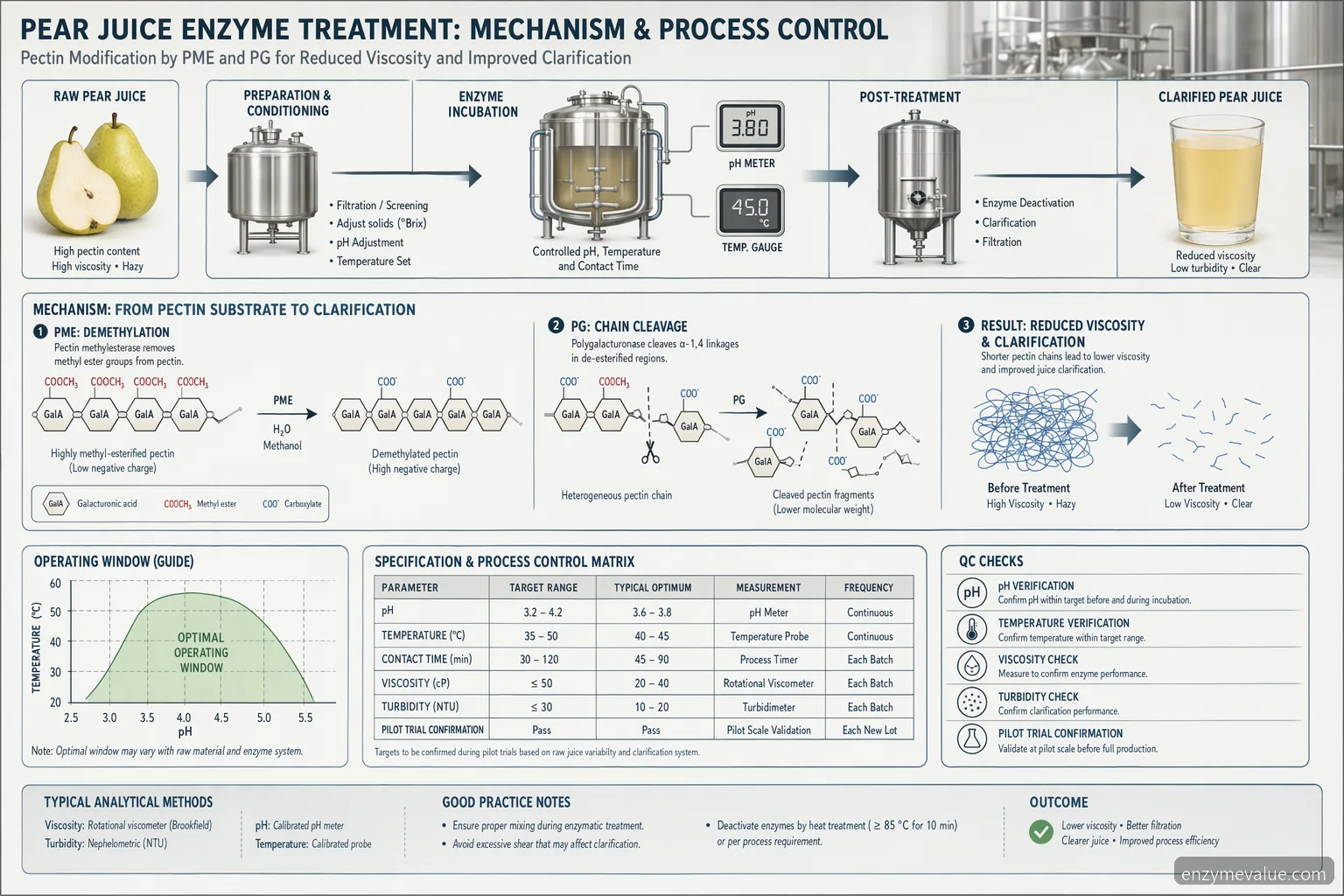
A practical pilot for pectin methylesterase for juice processing should begin with the processor’s normal pear variety, ripeness, milling size, antioxidant program, and press cycle. For many pear mashes, initial screening can be run at pH 3.4-4.0 and 40-55°C for 30-120 minutes. Dosage depends strongly on enzyme concentration and activity definition, but a common screening band is 20-150 g or mL per metric ton of mash for each formulated enzyme, followed by narrower optimization. If the supplier provides a blended PME enzyme and PG product, trial the blend separately from individual enzymes to understand flexibility. Avoid assuming that data from pectin methylesterase in orange juice, pectin methylesterase orange juice systems, or tomato pectin methylesterase and polygalacturonase studies will transfer directly to pear. Fruit pectin chemistry, calcium content, soluble solids, and natural enzyme background can all change results.
Start with three dosage points and one untreated control. • Hold temperature within ±2°C during bench trials. • Use plant water, real mash, and actual contact time where possible. • Scale up only after viscosity and press-yield data are repeatable.
Optimum Temperature, pH, and Enzyme Sequence
The pectin methylesterase and polygalacturonase optimum temperature depends on the source organism, formulation, and stabilizers, so the TDS should always be the primary reference. In pear juice applications, many processors screen PME and PG around 45-50°C first, then expand to 40, 50, and 55°C to identify the best cost-in-use point. pH is equally important: pear juice often sits in a range where PG performs well, while some PME products may prefer a higher pH than the juice naturally provides. Do not adjust pH unless the sensory, regulatory, and downstream process impact is acceptable. Sequence can matter. Some plants add PME first for short de-esterification, then PG, while others use a balanced blend. The correct approach is the one that gives lower viscosity, acceptable turbidity, and stable filtration without creating gel particles or haze reversion.
Confirm whether the product is acid-active, neutral-active, or blended. • Compare simultaneous dosing versus staged dosing in pilot work. • Measure both immediate viscosity reduction and next-day stability. • Include heat inactivation trials if residual activity is a concern.
QC Checks for Industrial Pear Juice Plants
A robust QC plan converts enzyme trials into purchasing specifications. Before and after treatment, measure mash or juice viscosity, press yield, turbidity, pH, Brix, temperature, and contact time. For clarified pear juice, add filterability, haze stability, and sediment observation after cold storage. If PME activity is high, evaluate methanol formation according to applicable local limits and customer specifications, especially for concentrates or products with long holding times. Calcium content is also useful because PME-generated low-methyl pectin can interact with calcium. For comparison, processors working with pectin methylesterase in tomato juice often monitor serum separation and texture effects; those learnings are relevant as a warning that pectin modification can change physical stability in multiple directions. Every lot-to-lot enzyme change should be checked against a retained reference lot or an agreed activity specification.
Core tests: viscosity, yield, turbidity, pH, Brix, and filterability. • Risk tests: methanol, calcium interaction, haze reversion, and sediment. • Documentation: batch number, dose, addition point, time, and temperature. • Acceptance criteria should be linked to finished-product specifications.
How to Evaluate a PME Supplier for Juice Processing
A pectin methylesterase supplier for juice processing should provide more than a price quotation. Request a current COA for the proposed lot, a TDS with activity definition and recommended operating range, and an SDS covering safe handling, dust or aerosol precautions, storage, and disposal. Ask whether the product is PME-only, PG-only, or a blended pectinase system, and confirm carriers, preservatives, allergen statements, country of origin, shelf life, and storage temperature. For purchasing, compare cost-in-use by metric ton of fruit or finished juice, not just cost per kilogram of enzyme. A higher-priced enzyme may be economical if it reduces dose, holding time, filtration aid, or press losses. Supplier qualification should also include sample availability, technical support for pilot validation, lot traceability, change-control communication, and the ability to support repeat orders at industrial scale.
Required documents: COA, TDS, SDS, and traceability information. • Commercial metric: cost per ton of fruit processed. • Technical metric: repeatable performance at plant pH and temperature. • Supply metric: lead time, packaging size, shelf life, and change notice.
Technical Buying Checklist
Buyer Questions
PME de-esterifies pectin, while polygalacturonase hydrolyzes the pectin backbone. In pear mash, the combination can reduce viscosity and improve pressability when correctly balanced. PME alone may not be sufficient and can create calcium-reactive pectin structures. That is why processors should validate the ratio, sequence, temperature, and contact time with real pear mash before plant-scale use.
Data for pectin methylesterase in orange juice or tomato pectin methylesterase and polygalacturonase can help define a starting hypothesis, but it should not replace pear-specific validation. Pear pectin structure, pH, calcium level, maturity, and soluble solids differ from orange and tomato systems. Use external data for screening ranges only, then confirm performance with your own fruit, equipment, and product specifications.
A practical first screen is often 20-150 g or mL per metric ton of pear mash for each enzyme product, depending on the supplier’s activity and formulation. Run an untreated control and at least three dosage points. The final dose should be based on yield, viscosity, turbidity, filterability, residence time, and cost-in-use, not on generic activity units alone.
For B2B qualification, request a COA for the lot, a TDS with activity definition and operating range, and an SDS for safe handling and storage. Also ask for carrier and allergen statements, country of origin, shelf life, storage conditions, packaging options, lot traceability, and change-control practices. These documents support purchasing, QA review, and pilot-to-plant scale-up.
Cost-in-use should include enzyme dose per metric ton of fruit, enzyme price, yield improvement, reduced press time, filtration savings, energy impact, and any extra holding or heating cost. A lower-priced enzyme may be more expensive if it requires higher dosage or longer contact time. Compare trial results at equal process targets, such as final viscosity, turbidity, and press yield.
Related Search Themes
pectin methylesterase in orange juice, tomato pectin methylesterase and polygalacturonase, pectin methylesterase supplier for juice processing, pectin methylesterase orange juice, pectin methylesterase in tomato juice, pectin methylesterase for juice processing
Pectin Methylesterase (PME) for Research & Industry
Need Pectin Methylesterase (PME) for your lab or production process?
ISO 9001 certified · Food-grade & research-grade · Ships to 80+ countries
Frequently Asked Questions
Why combine pectin methylesterase and polygalacturonase in pear juice?
PME de-esterifies pectin, while polygalacturonase hydrolyzes the pectin backbone. In pear mash, the combination can reduce viscosity and improve pressability when correctly balanced. PME alone may not be sufficient and can create calcium-reactive pectin structures. That is why processors should validate the ratio, sequence, temperature, and contact time with real pear mash before plant-scale use.
Can orange juice or tomato juice data be used for pear juice trials?
Data for pectin methylesterase in orange juice or tomato pectin methylesterase and polygalacturonase can help define a starting hypothesis, but it should not replace pear-specific validation. Pear pectin structure, pH, calcium level, maturity, and soluble solids differ from orange and tomato systems. Use external data for screening ranges only, then confirm performance with your own fruit, equipment, and product specifications.
What dosage should an industrial processor start with?
A practical first screen is often 20-150 g or mL per metric ton of pear mash for each enzyme product, depending on the supplier’s activity and formulation. Run an untreated control and at least three dosage points. The final dose should be based on yield, viscosity, turbidity, filterability, residence time, and cost-in-use, not on generic activity units alone.
What documents should a pectin methylesterase supplier provide?
For B2B qualification, request a COA for the lot, a TDS with activity definition and operating range, and an SDS for safe handling and storage. Also ask for carrier and allergen statements, country of origin, shelf life, storage conditions, packaging options, lot traceability, and change-control practices. These documents support purchasing, QA review, and pilot-to-plant scale-up.
How is enzyme cost-in-use calculated for pear juice?
Cost-in-use should include enzyme dose per metric ton of fruit, enzyme price, yield improvement, reduced press time, filtration savings, energy impact, and any extra holding or heating cost. A lower-priced enzyme may be more expensive if it requires higher dosage or longer contact time. Compare trial results at equal process targets, such as final viscosity, turbidity, and press yield.
Related: Pectin Methylesterase for Better Texture Control
Turn This Guide Into a Supplier Brief Request a PME and PG juice-processing sample, COA, TDS, SDS, and pilot-trial support from Enzyme Value. See our application page for Pectin Methylesterase for Better Texture Control at /applications/pectin-methylesterase-optimum/ for specs, MOQ, and a free 50 g sample.
Contact Us to Contribute