Pectin Methylesterase for Juice Processing Formulations
B2B guide to pectin methylesterase for juice processing: formulation use, dosage ranges, QC checks, validation, and supplier selection.
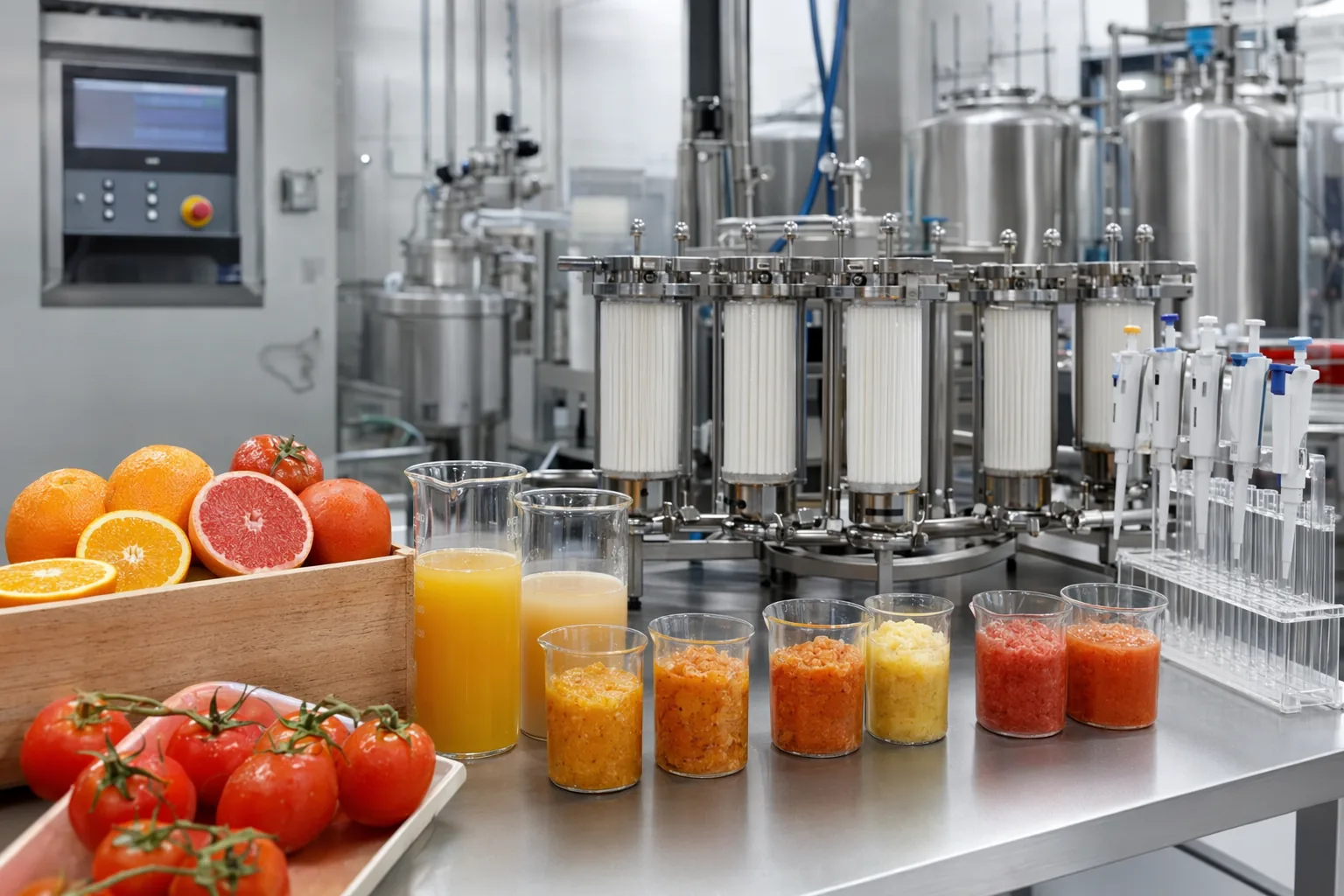
Use pectin methylesterase to control pectin structure, improve juice processing performance, and build validated enzyme systems for fruit and vegetable applications.
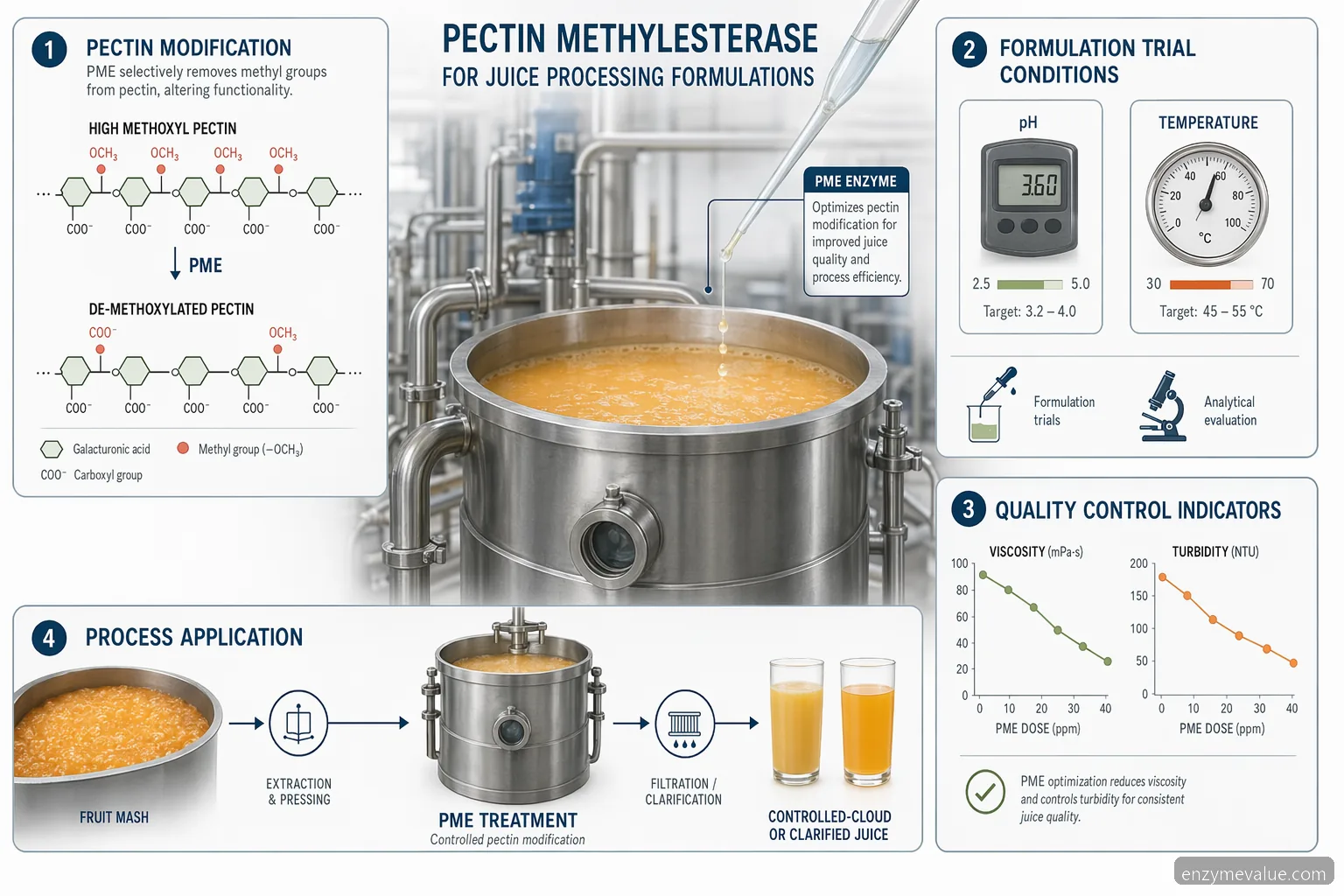
What Pectin Methylesterase Does in Juice Processing
Pectin methylesterase for juice processing is used to modify pectin by removing methyl ester groups from the pectin backbone. This de-esterification changes pectin behavior, including solubility, interaction with calcium, susceptibility to polygalacturonase, and impact on viscosity or cloud stability. In practical juice applications, PME enzyme is rarely selected only by name; it is selected by activity profile, side activities, food-grade suitability, carrier system, and performance in the target fruit. For citrus, apple, pear, tomato, and mixed fruit bases, the same enzyme can produce different outcomes because pH, soluble solids, calcium level, pulp content, and heat history affect the reaction. A good formulation program defines whether the target is higher yield, lower viscosity, improved pressing, faster clarification, controlled pulp separation, or a specific cloud profile.
Also known as pectin esterase or de-esterification enzyme • Often paired with polygalacturonase or pectin lyase • Performance depends strongly on the juice matrix • Best evaluated through bench and pilot trials
Where PME Fits in Industrial Juice Formulations
Industrial pectin methylesterase juice processing applications include mash treatment before pressing, clarification pretreatment, pulp conditioning, and controlled pectin modification before downstream enzymatic hydrolysis. In orange juice, pectin methylesterase can influence cloud stability because de-esterified pectin may interact with calcium and insoluble particles. For this reason, pectin methylesterase in orange juice should be controlled carefully and validated against turbidity, serum separation, and heat-inactivation requirements. In tomato juice, PME can affect consistency and serum viscosity, especially when calcium and heat treatment are part of the process design. In pear juice, pectin methylesterase and polygalacturonase may be screened together to reduce viscosity and improve filtration while avoiding over-processing. The best formulation depends on whether the process is cloudy juice, clear juice, puree-derived juice, concentrate feed, or peel-derived extract.
Mash treatment before pressing • Clarification or filtration support • Pulp and viscosity management • Controlled pectin modification before PG treatment
Starting Process Conditions for Formulation Trials
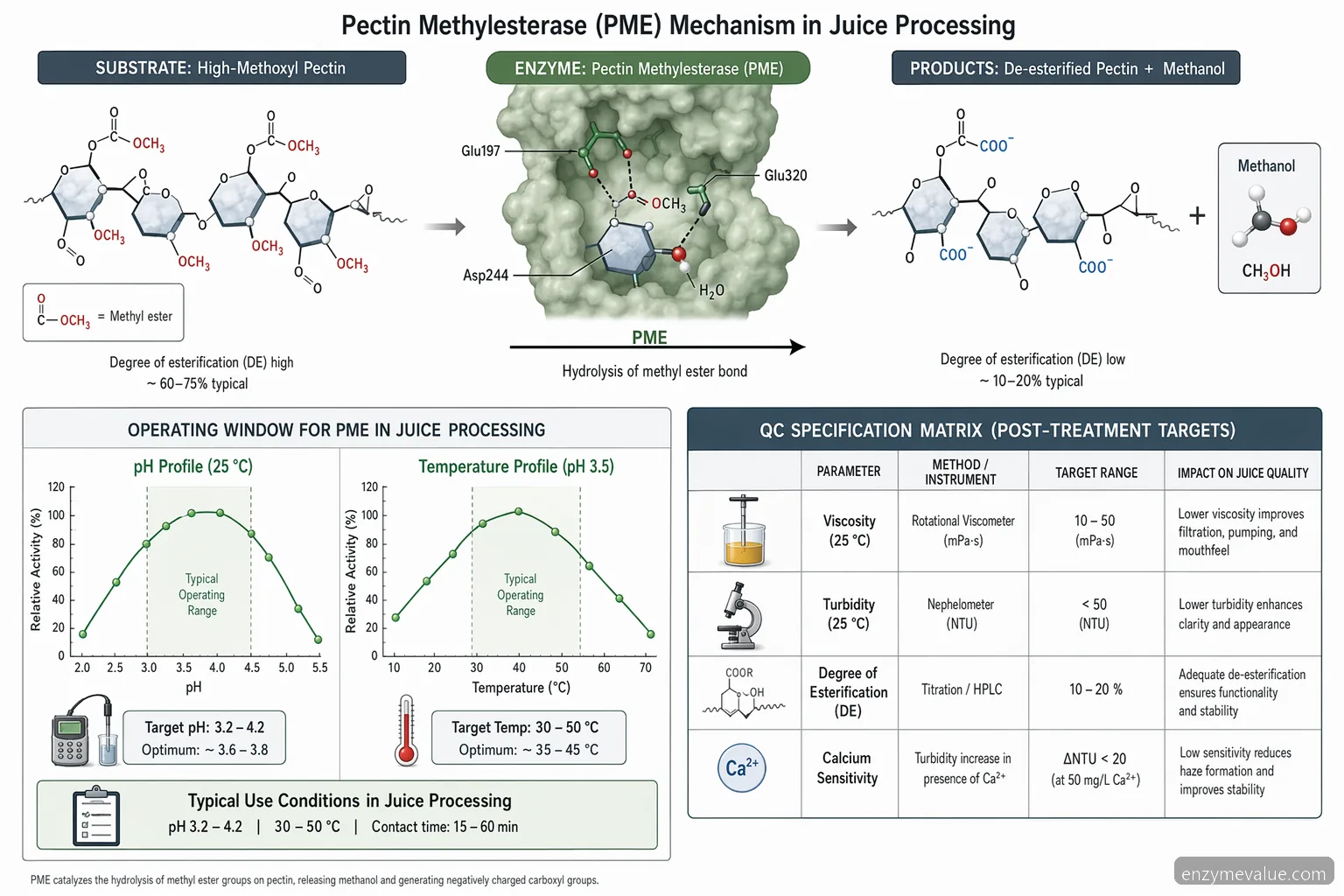
A pectin esterase for juice processing trial should begin with conservative conditions and a defined stop point. Many commercial PME systems are evaluated in the pH 3.2 to 5.0 range, with temperature screening from 30 to 55°C, depending on fruit type and enzyme source. A practical first dosage screen may use 10 to 100 g per metric ton of mash or juice, or an equivalent activity-unit range supplied on the TDS. Contact time is commonly screened from 15 to 90 minutes. These values are starting points, not guarantees, because enzyme activity units are not standardized across suppliers. After treatment, heat inactivation is often validated around 85 to 95°C for a short hold, or according to the thermal process already used in the plant. Always verify residual activity when cloud or viscosity stability matters.
Screen pH 3.2–5.0 based on fruit matrix • Evaluate 30–55°C before scaling up • Start with 10–100 g/MT when supplier data allows • Confirm enzyme inactivation after treatment
QC Checks That Matter Before Scale-Up
The most useful QC plan links enzyme dosing to measurable processing outcomes. For clear juice, monitor viscosity, turbidity, filterability, press yield, sediment, and residual pectin. For cloudy orange juice, add cloud stability, serum separation, particle size, and calcium sensitivity. For tomato juice, track Bostwick consistency, serum viscosity, pulp distribution, and heat-set behavior. If the objective is de-esterification control, measure degree of esterification or use a validated indirect assay agreed with the supplier. Plants may also check methanol generation where relevant to internal specifications or regulatory expectations. Compare treated samples against a no-enzyme control and, when applicable, against a polygalacturonase-only or pectin lyase-only treatment. Good trials record lot number, enzyme activity, dosage basis, time, temperature, pH, soluble solids, and inactivation conditions.
Viscosity and filterability • Turbidity and cloud stability • Residual pectin or degree of esterification • Press yield and sediment level • Residual enzyme activity after heat treatment
Combining PME with Other Pectinolytic Enzymes
PME often works as part of a pectinase system rather than as a standalone solution. By de-esterifying pectin, PME can make the polymer more suitable for further hydrolysis by polygalacturonase, depending on the substrate and process objective. This is why pectin methylesterase and polygalacturonase pear juice trials are common when processors want viscosity reduction, improved juice release, or easier clarification. However, more PME is not always better. Excessive or poorly timed de-esterification may increase calcium-mediated flocculation or create unwanted texture changes. Formulators should compare sequential addition, simultaneous addition, and blended enzyme products. The right approach depends on fruit maturity, pectin level, calcium concentration, and whether the final product is clear, cloudy, pulpy, or concentrated. A supplier should explain the enzyme ratio and provide activity data for each relevant component.
Test PME alone and in enzyme blends • Compare simultaneous versus sequential addition • Control calcium-related flocculation risk • Match enzyme ratio to product format
How to Qualify a Pectin Methylesterase Supplier
A pectin methylesterase supplier for juice processing should support both documentation and application work. Request a current COA for the lot, TDS with activity definition and recommended use range, SDS, storage and shelf-life guidance, carrier or diluent information, and food-use status relevant to your market. Ask how activity is measured, because one supplier’s unit may not equal another’s. For purchasing, compare cost-in-use rather than price per kilogram: dosage, activity retention, filtration gain, yield improvement, batch time reduction, and waste impact all affect true cost. Supplier qualification should include bench screening, pilot validation, production trial approval, and incoming QC checks for each lot. If you are also evaluating a pectin esterase supplier for juice processing, require side-by-side samples and consistent technical support before standardizing the formulation.
Request COA, TDS, and SDS • Confirm activity method and dosage basis • Run bench and pilot validation • Compare cost-in-use, not only unit price • Set incoming QC and storage controls
Technical Buying Checklist
Buyer Questions
Pectin methylesterase is used to de-esterify pectin in fruit or vegetable juice systems. This can change viscosity, clarification behavior, calcium interaction, and how pectin responds to other enzymes such as polygalacturonase. In industrial juice processing, it is evaluated for pressing, filtration, clarification, pulp control, or cloud management, depending on the final product specification.
Pectin methylesterase in orange juice must be controlled carefully. It can influence cloud stability because de-esterified pectin may interact with calcium and suspended particles. For cloudy orange juice, processors should test turbidity, serum separation, particle size, residual activity, and heat inactivation. The enzyme may be useful in specific formulations, but uncontrolled PME activity can create quality defects.
A common first screen is 10–100 g per metric ton of mash or juice, or the equivalent activity-unit dosage recommended by the supplier. The correct dosage depends on enzyme activity, fruit type, pH, temperature, contact time, pulp level, and target outcome. Always run bench trials and pilot validation before fixing a commercial formulation.
Yes. Pectin methylesterase and polygalacturonase pear juice trials are often used to evaluate viscosity reduction, juice release, and filtration improvement. PME modifies pectin so that polygalacturonase may act more effectively in some systems. However, the ratio, sequence, and treatment time should be optimized to prevent over-processing, sediment issues, or unwanted texture changes.
Choose a supplier that provides COA, TDS, SDS, activity method, storage guidance, carrier details, and application support. Compare suppliers using cost-in-use, not only price per kilogram. Request samples, run side-by-side bench trials, confirm pilot performance, and set incoming QC checks before approving the enzyme for routine industrial production.
Related Search Themes
pectin methylesterase supplier for juice processing, industrial pectin methylesterase juice processing, pectin methylesterase in orange juice, pectin methylesterase orange juice, pectin methylesterase in tomato juice, pectin methylesterase and polygalacturonase pear juice
Pectin Methylesterase (PME) for Research & Industry
Need Pectin Methylesterase (PME) for your lab or production process?
ISO 9001 certified · Food-grade & research-grade · Ships to 80+ countries
Frequently Asked Questions
What is pectin methylesterase used for in juice processing?
Pectin methylesterase is used to de-esterify pectin in fruit or vegetable juice systems. This can change viscosity, clarification behavior, calcium interaction, and how pectin responds to other enzymes such as polygalacturonase. In industrial juice processing, it is evaluated for pressing, filtration, clarification, pulp control, or cloud management, depending on the final product specification.
Is pectin methylesterase good for orange juice?
Pectin methylesterase in orange juice must be controlled carefully. It can influence cloud stability because de-esterified pectin may interact with calcium and suspended particles. For cloudy orange juice, processors should test turbidity, serum separation, particle size, residual activity, and heat inactivation. The enzyme may be useful in specific formulations, but uncontrolled PME activity can create quality defects.
What dosage should be used for PME enzyme in juice?
A common first screen is 10–100 g per metric ton of mash or juice, or the equivalent activity-unit dosage recommended by the supplier. The correct dosage depends on enzyme activity, fruit type, pH, temperature, contact time, pulp level, and target outcome. Always run bench trials and pilot validation before fixing a commercial formulation.
Can PME be used with polygalacturonase in pear juice?
Yes. Pectin methylesterase and polygalacturonase pear juice trials are often used to evaluate viscosity reduction, juice release, and filtration improvement. PME modifies pectin so that polygalacturonase may act more effectively in some systems. However, the ratio, sequence, and treatment time should be optimized to prevent over-processing, sediment issues, or unwanted texture changes.
How should I choose a pectin esterase supplier for juice processing?
Choose a supplier that provides COA, TDS, SDS, activity method, storage guidance, carrier details, and application support. Compare suppliers using cost-in-use, not only price per kilogram. Request samples, run side-by-side bench trials, confirm pilot performance, and set incoming QC checks before approving the enzyme for routine industrial production.
Related: Pectin Methylesterase for Better Texture Control
Turn This Guide Into a Supplier Brief Request PME specifications, samples, and pilot support for your juice processing formulation. See our application page for Pectin Methylesterase for Better Texture Control at /applications/pectin-methylesterase-optimum/ for specs, MOQ, and a free 50 g sample.
Contact Us to Contribute