Pectin Methylesterase Supplier for Juice Processing: Dosage, pH, and Temperature Guide
Troubleshoot PME enzyme dosage, pH, temperature, QC, and supplier checks for juice processing, orange juice, jam, and citrus peel.
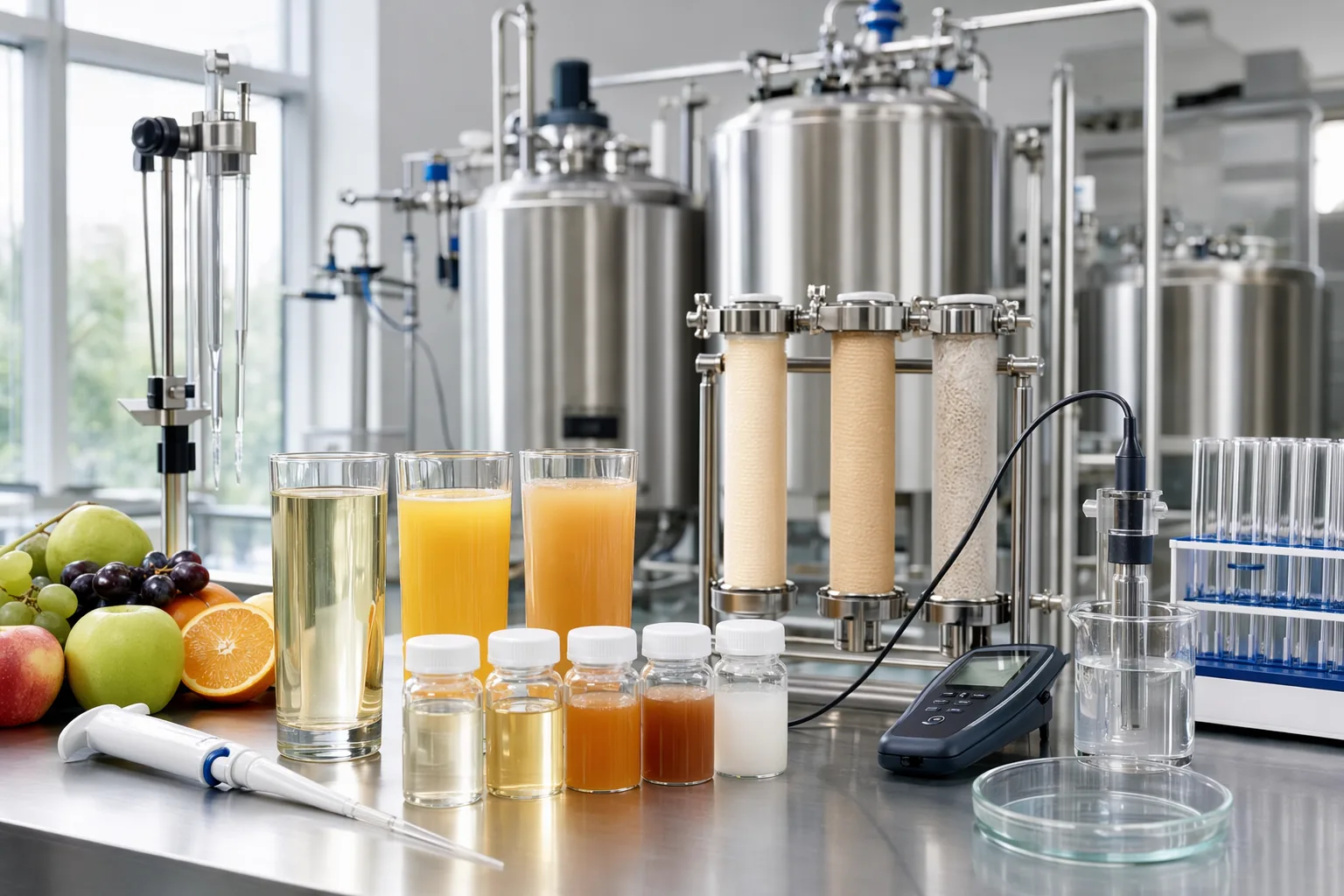
Industrial juice processors use pectin methylesterase to control pectin structure, improve downstream pectin breakdown, and troubleshoot viscosity, clarification, cloud, and gel behavior.
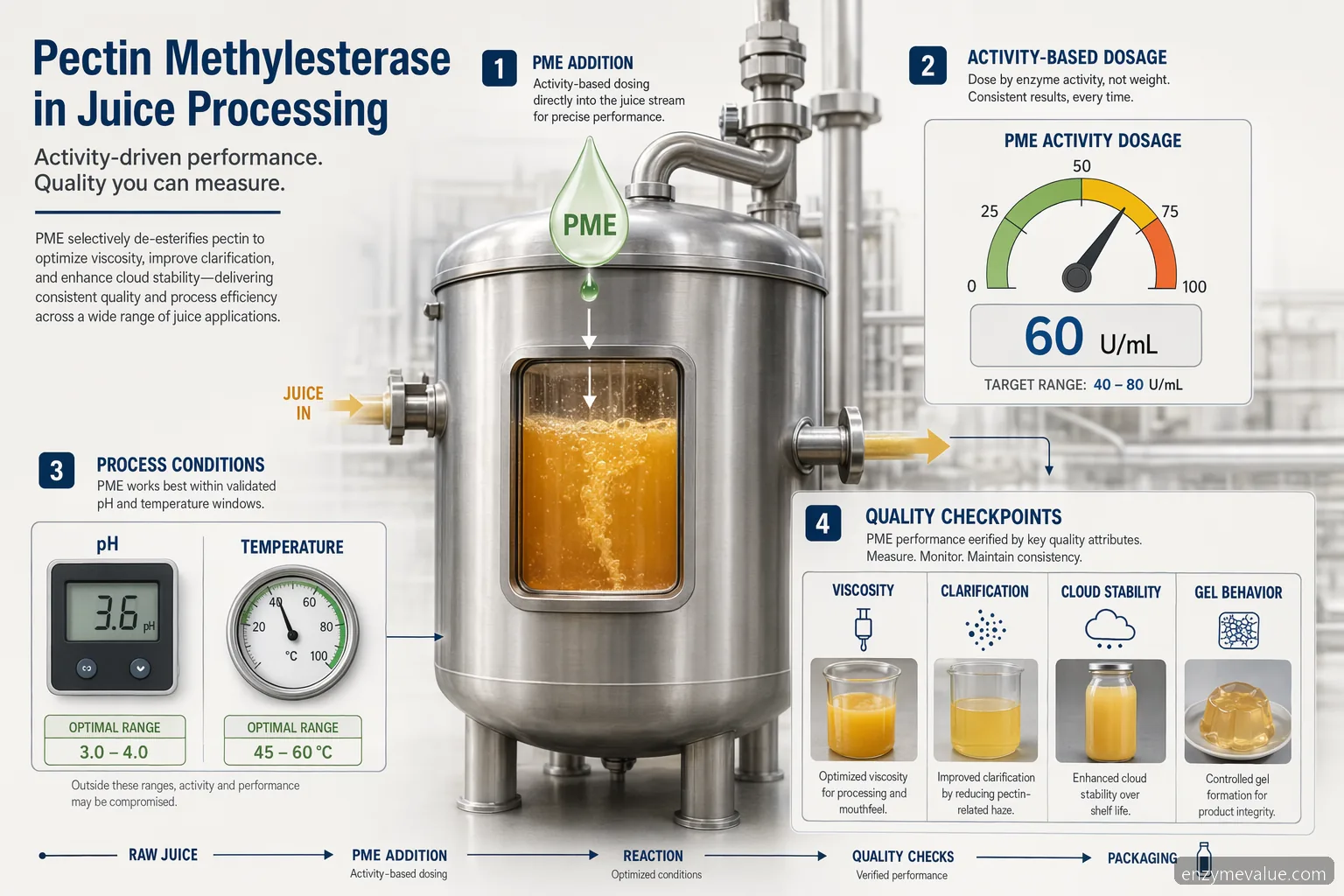
Where PME fits in juice processing
Pectin methylesterase, also called PME enzyme or pectin esterase, removes methyl ester groups from pectin and produces a more calcium-reactive pectin structure. In juice processing, this can be useful when a processor wants to prepare pectin for further depolymerization by polygalacturonase, improve press yield, support clarification, or manage viscosity before filtration. It can also create problems if the enzyme is present unintentionally, especially in citrus juice where de-esterified pectin may interact with calcium and reduce cloud stability. A qualified pectin methylesterase supplier for juice processing should therefore discuss the process objective first: yield improvement, clarification, texture control, cloud stabilization, or controlled gel behavior. PME is rarely selected in isolation. It is normally evaluated with the existing pectinase system, raw material pectin type, calcium level, pulp content, heat profile, and residence time.
Common targets: viscosity reduction, pressability, clarification, or controlled pectin modification. • Common risk: cloud loss in citrus if PME is not controlled or inactivated. • Best practice: validate PME together with the full enzyme blend and heat process.
Dosage troubleshooting: start with activity, not kilograms
For industrial pectin methylesterase juice processing trials, dosage should be based on declared enzyme activity and the processor’s substrate load, not a generic addition rate. As a screening band, many plants begin with low pilot additions equivalent to about 5 to 50 PME activity units per kilogram of juice or mash, then adjust according to viscosity drop, filtration rate, clarification time, or degree of esterification change. If the product is supplied as a formulated liquid or powder, this may translate into a wide practical range such as 20 to 200 g per metric ton, but only the supplier’s TDS and activity method can make that number meaningful. Overdosing can increase methanol formation, change calcium sensitivity, or worsen cloud instability. Underdosing may show little effect because native pectin, pulp load, and temperature consume the practical activity window.
Run at least three dosage points plus a no-enzyme control. • Hold time commonly starts at 30 to 120 minutes in pilot trials. • Track cost-in-use per ton of juice, not just enzyme price. • Confirm whether the dosage is for single PME or a pectinase blend.
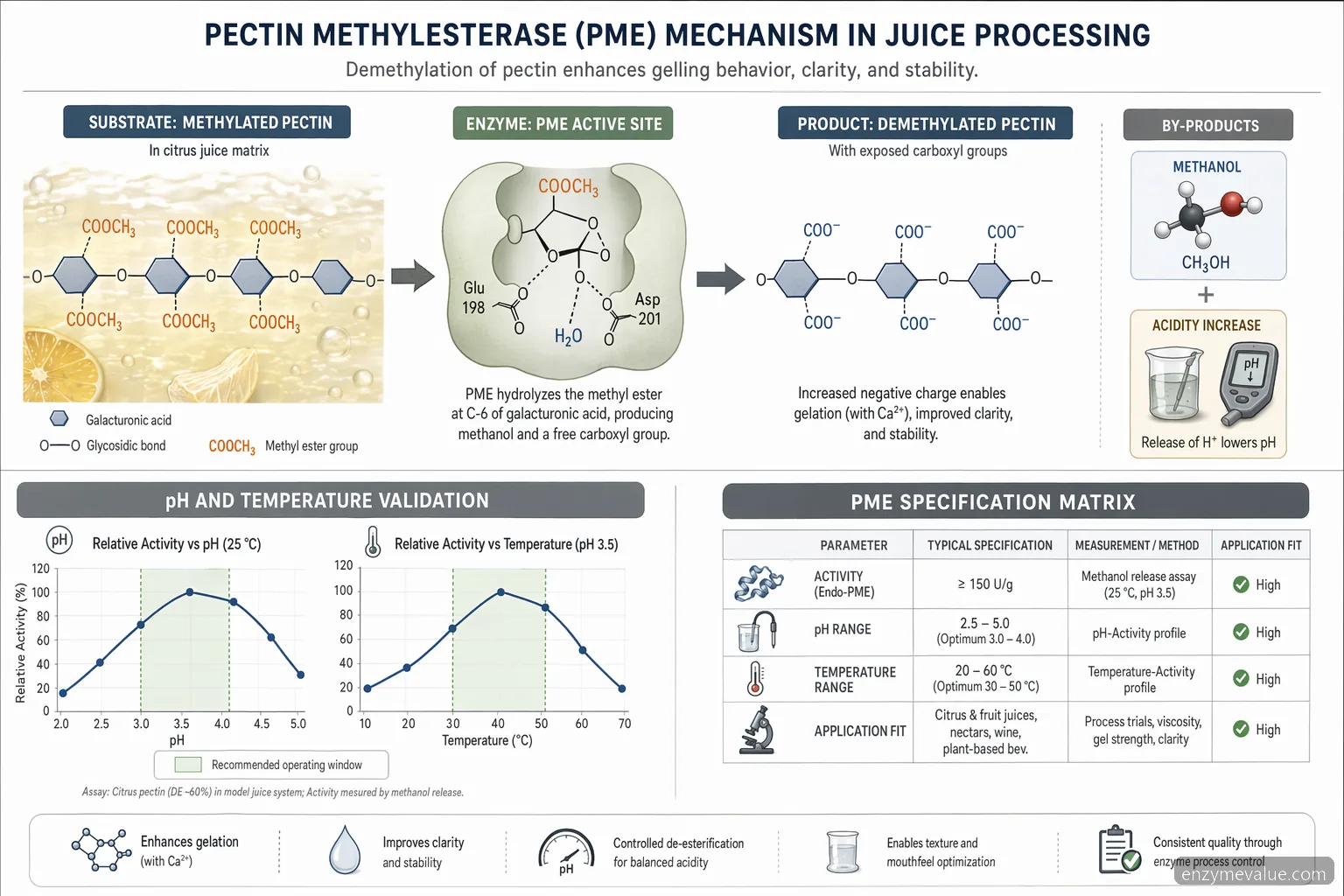
pH and temperature windows to validate
The useful operating window depends strongly on enzyme source and formulation. Many fungal pectin esterase products used in fruit processing are evaluated around pH 3.0 to 5.0, which matches apple, berry, and many citrus systems. Some PME enzymes from other sources have higher pH optima and may not be ideal for acidic juice unless specifically formulated for that range. Temperature screening often starts around 35 to 55°C because reaction speed increases with temperature, while excessive heat can denature the enzyme or damage juice quality. In orange juice, the processor must also consider endogenous PME, which may survive mild heating and cause later cloud loss. When heat inactivation is required, verify it analytically under the plant’s real pasteurization profile rather than assuming complete inactivation from a textbook temperature.
Typical trial pH: 3.0 to 5.0 for acidic fruit juices, subject to supplier TDS. • Typical trial temperature: 35 to 55°C for controlled reaction studies. • Thermal inactivation must be validated for the exact juice matrix and residence time. • Adjust pH only if allowed by product standards and customer specifications.
QC checks that show whether PME is helping
A reliable PME trial needs measurable endpoints. For clarification or filtration, monitor turbidity, nephelometric turbidity units, filterability, centrifuge sediment, juice yield, and viscosity. For pectin modification, test degree of esterification, methanol formation where relevant, calcium sensitivity, and residual PME activity after heat treatment. In citrus, include cloud stability testing after accelerated storage because pectin methylesterase in orange juice may create a delayed defect rather than an immediate failure. For jam or fruit preparation applications, track gel strength, soluble solids, pH, calcium response, syneresis, and filling behavior. The best pme enzyme supplier for juice processing will provide a COA with batch activity, a TDS with recommended conditions, an SDS for handling, and a clear method for correlating lab dosage to production-scale addition.
Clarification KPIs: turbidity, filtration rate, sediment, and viscosity. • Citrus KPIs: cloud stability, residual PME, calcium sensitivity, and heat inactivation. • Jam KPIs: gel strength, syneresis, pH, soluble solids, and texture consistency.
Orange juice, jam, and citrus peel considerations
Pectin methylesterase orange juice projects require special caution because both native and added PME can change cloud behavior. If the objective is stable cloudy juice, the supplier should help confirm whether PME activity should be minimized, controlled briefly, or fully inactivated after reaction. In jam, a pectin methylesterase supplier for jam may support controlled de-esterification so pectin responds differently to calcium and sugar-acid balance, but the process must be validated against final texture and label requirements. For citrus peel, PME can be part of a pectin modification or extraction strategy, where peel particle size, blanching, calcium, pH, and contact time determine the outcome. These applications are related, but they are not interchangeable. A pectin methylesterase supplier for citrus peel should provide application-specific dosage guidance rather than reusing a juice clarification protocol.
Orange juice: prioritize cloud stability and residual PME control. • Jam: validate gel behavior, syneresis, and batch-to-batch texture. • Citrus peel: evaluate pectin modification, extraction yield, and calcium effects.
How to qualify a PME supplier
When comparing a pectin esterase supplier for juice processing, request technical documents before placing a production order. The COA should state lot number, activity, physical form, and release specifications. The TDS should define activity units, recommended pH and temperature, storage conditions, compatibility notes, and dosage guidance. The SDS should cover safe handling, dust or aerosol precautions, and emergency measures. Ask whether the enzyme contains relevant side activities such as polygalacturonase, pectin lyase, cellulase, or hemicellulase, because these can change viscosity and clarification results. Supplier qualification should also include sample availability, pilot support, lead time, packaging options, allergen or carrier disclosure where applicable, and change-control communication. The winning option is the one that delivers repeatable process performance at the lowest validated cost-in-use.
Request COA, TDS, SDS, and activity method before trials. • Check side activities and carrier composition. • Compare cost per processed ton at target performance. • Require pilot validation before full-scale conversion. • Confirm batch consistency and change-control practices.
Technical Buying Checklist
Buyer Questions
Ask for an activity-based dosage recommendation, not only grams per ton. A practical pilot design often screens low, medium, and high additions, such as 5 to 50 PME activity units per kg of juice or mash, plus a no-enzyme control. The final dosage depends on pectin load, pH, temperature, hold time, calcium level, and whether the PME is used alone or in a pectinase blend.
It can be relevant, but orange juice requires careful control. PME may modify pectin in ways that affect cloud stability, and native orange PME can also remain active if heat treatment is insufficient. If stable cloudy juice is the target, confirm residual PME and cloud stability after processing. If controlled pectin modification is the target, validate reaction time, calcium response, and a reliable inactivation step.
Many acidic fruit juice trials begin around pH 3.0 to 5.0 and 35 to 55°C, but the correct range depends on enzyme source and formulation. Use the supplier TDS as the starting point, then confirm performance in your own juice matrix. Do not assume that a PME optimized for neutral pH will perform efficiently in acidic juice without specific validation.
A qualified supplier should provide a COA for each batch, a TDS with activity units and recommended use conditions, and an SDS for safe handling. For B2B purchasing, also request storage conditions, shelf-life guidance, side-activity information, carrier disclosure where applicable, packaging options, and traceability. These documents help purchasing, QA, production, and regulatory teams evaluate the enzyme before plant trials.
Compare them by validated cost-in-use and process reliability, not price per kilogram. Run the same pilot design, using equivalent activity units where possible. Measure viscosity, filtration rate, turbidity, yield, cloud stability, residual activity, and sensory impact. Also compare documentation quality, batch consistency, technical support, lead time, packaging, and willingness to help translate pilot results into production dosing.
Related Search Themes
pectin methylesterase for juice processing, pectin esterase supplier for juice processing, industrial pectin methylesterase juice processing, pectin methylesterase in orange juice, pme enzyme supplier for juice processing, pectin methylesterase supplier for jam
Pectin Methylesterase (PME) for Research & Industry
Need Pectin Methylesterase (PME) for your lab or production process?
ISO 9001 certified · Food-grade & research-grade · Ships to 80+ countries
Frequently Asked Questions
What dosage should I request from a pectin methylesterase supplier for juice processing?
Ask for an activity-based dosage recommendation, not only grams per ton. A practical pilot design often screens low, medium, and high additions, such as 5 to 50 PME activity units per kg of juice or mash, plus a no-enzyme control. The final dosage depends on pectin load, pH, temperature, hold time, calcium level, and whether the PME is used alone or in a pectinase blend.
Is pectin methylesterase useful in orange juice?
It can be relevant, but orange juice requires careful control. PME may modify pectin in ways that affect cloud stability, and native orange PME can also remain active if heat treatment is insufficient. If stable cloudy juice is the target, confirm residual PME and cloud stability after processing. If controlled pectin modification is the target, validate reaction time, calcium response, and a reliable inactivation step.
What pH and temperature should be used for industrial pectin methylesterase juice processing?
Many acidic fruit juice trials begin around pH 3.0 to 5.0 and 35 to 55°C, but the correct range depends on enzyme source and formulation. Use the supplier TDS as the starting point, then confirm performance in your own juice matrix. Do not assume that a PME optimized for neutral pH will perform efficiently in acidic juice without specific validation.
What documents should a PME enzyme supplier provide?
A qualified supplier should provide a COA for each batch, a TDS with activity units and recommended use conditions, and an SDS for safe handling. For B2B purchasing, also request storage conditions, shelf-life guidance, side-activity information, carrier disclosure where applicable, packaging options, and traceability. These documents help purchasing, QA, production, and regulatory teams evaluate the enzyme before plant trials.
How do I compare two pectin esterase suppliers for juice processing?
Compare them by validated cost-in-use and process reliability, not price per kilogram. Run the same pilot design, using equivalent activity units where possible. Measure viscosity, filtration rate, turbidity, yield, cloud stability, residual activity, and sensory impact. Also compare documentation quality, batch consistency, technical support, lead time, packaging, and willingness to help translate pilot results into production dosing.
Related: Pectin Methylesterase for Better Texture Control
Turn This Guide Into a Supplier Brief Request a PME sample, COA, TDS, SDS, and pilot dosage plan for your juice process. See our application page for Pectin Methylesterase for Better Texture Control at /applications/pectin-methylesterase-optimum/ for specs, MOQ, and a free 50 g sample.
Contact Us to Contribute