Pectin Methylesterase Methanol Production: Process Guide
Process guide for pectin methylesterase methanol production: conditions, dosing, QC, safety data, pilot trials, and supplier qualification.
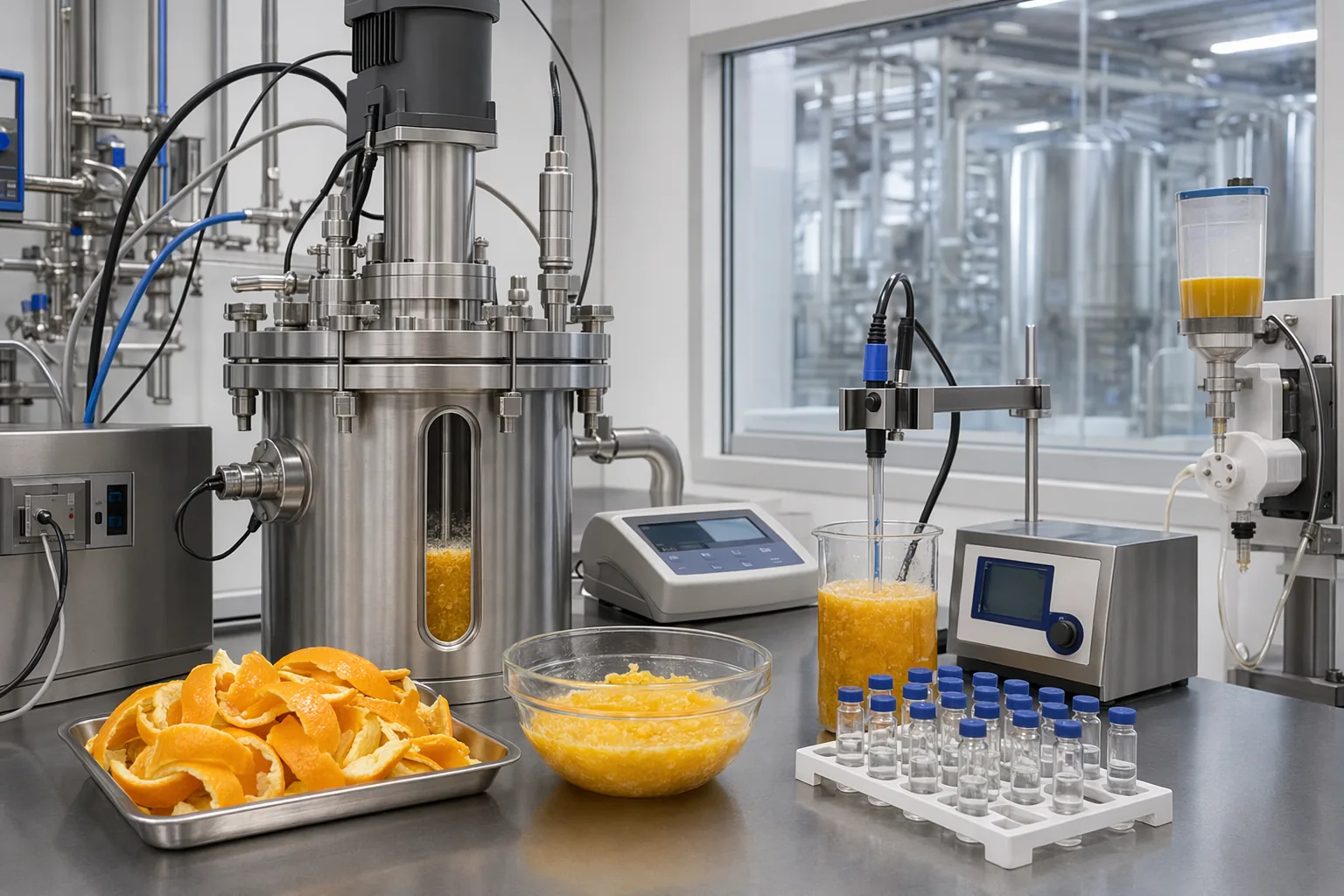
A practical B2B guide for using pectin methylesterase in controlled pectin de-esterification, citrus peel valorization, juice processing, and food ingredient production.
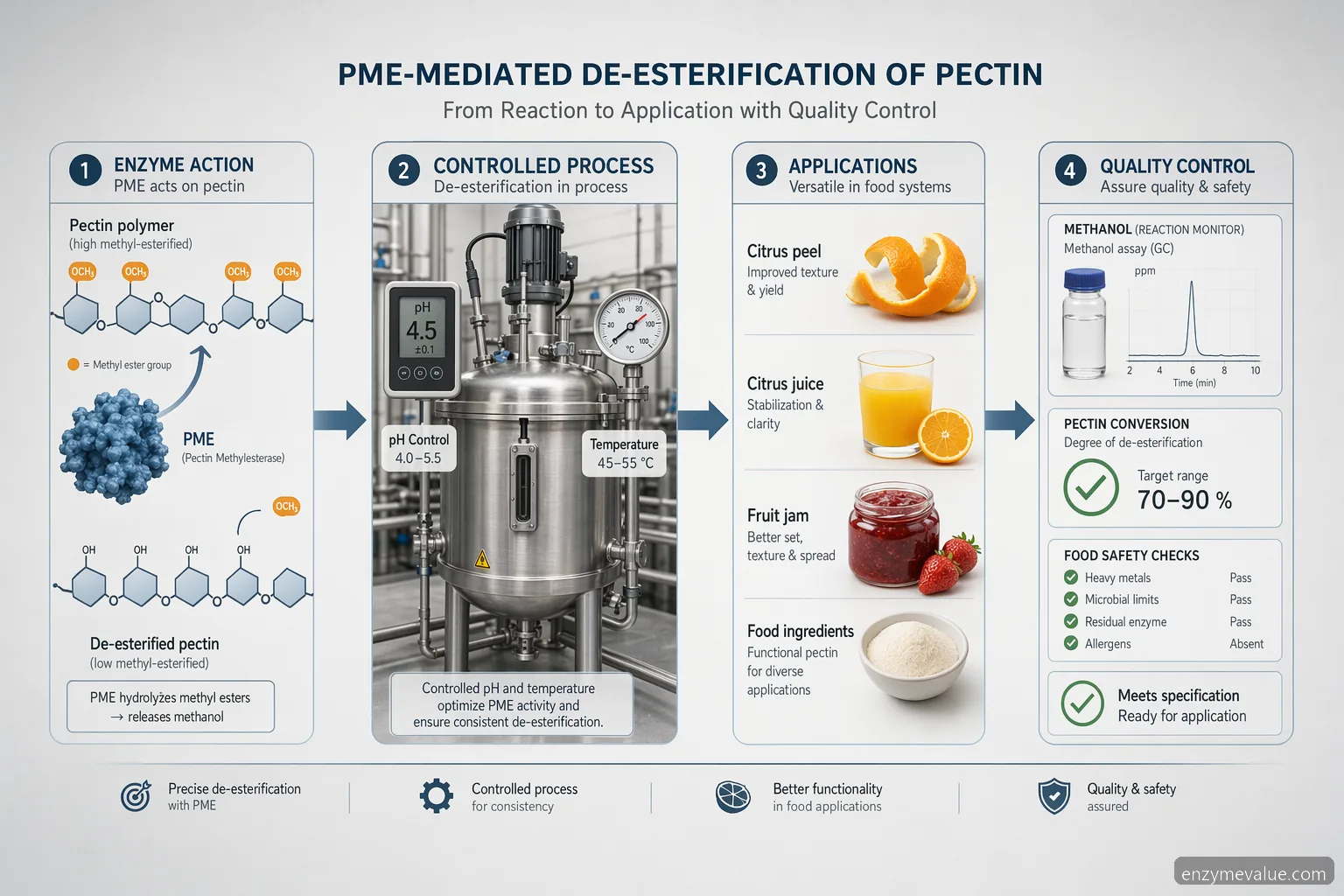
What Is Pectin Methylesterase and Why Methanol Forms
Pectin methylesterase, also called PME enzyme or pectin esterase, is a de-esterification enzyme that removes methyl ester groups from pectin. The pectin methylesterase function is to convert high-methoxyl pectin regions into lower-ester pectin while releasing methanol and free carboxyl groups. In industrial processing, this reaction can be useful for modifying pectin functionality, improving downstream hydrolysis, supporting citrus peel valorization, or creating conditions for calcium-assisted gel formation. The same chemistry also explains why pectin methylesterase methanol control matters in orange juice, fruit preparations, jam systems, and pectin-rich byproducts. For buyers, the key question is not only activity price, but whether the enzyme performs predictably under the plant’s pH, temperature, solids, and residence-time constraints. A qualified supplier should provide a Technical Data Sheet, Certificate of Analysis, Safety Data Sheet, and a clear activity assay definition.
Primary reaction: pectin methyl ester plus water yields pectate sites plus methanol. • Relevant substrates include citrus peel, apple pomace, juice pulp, and purified pectin. • Methanol release should be treated as a measurable process output, not an assumption.
Process Conditions for Controlled De-Esterification
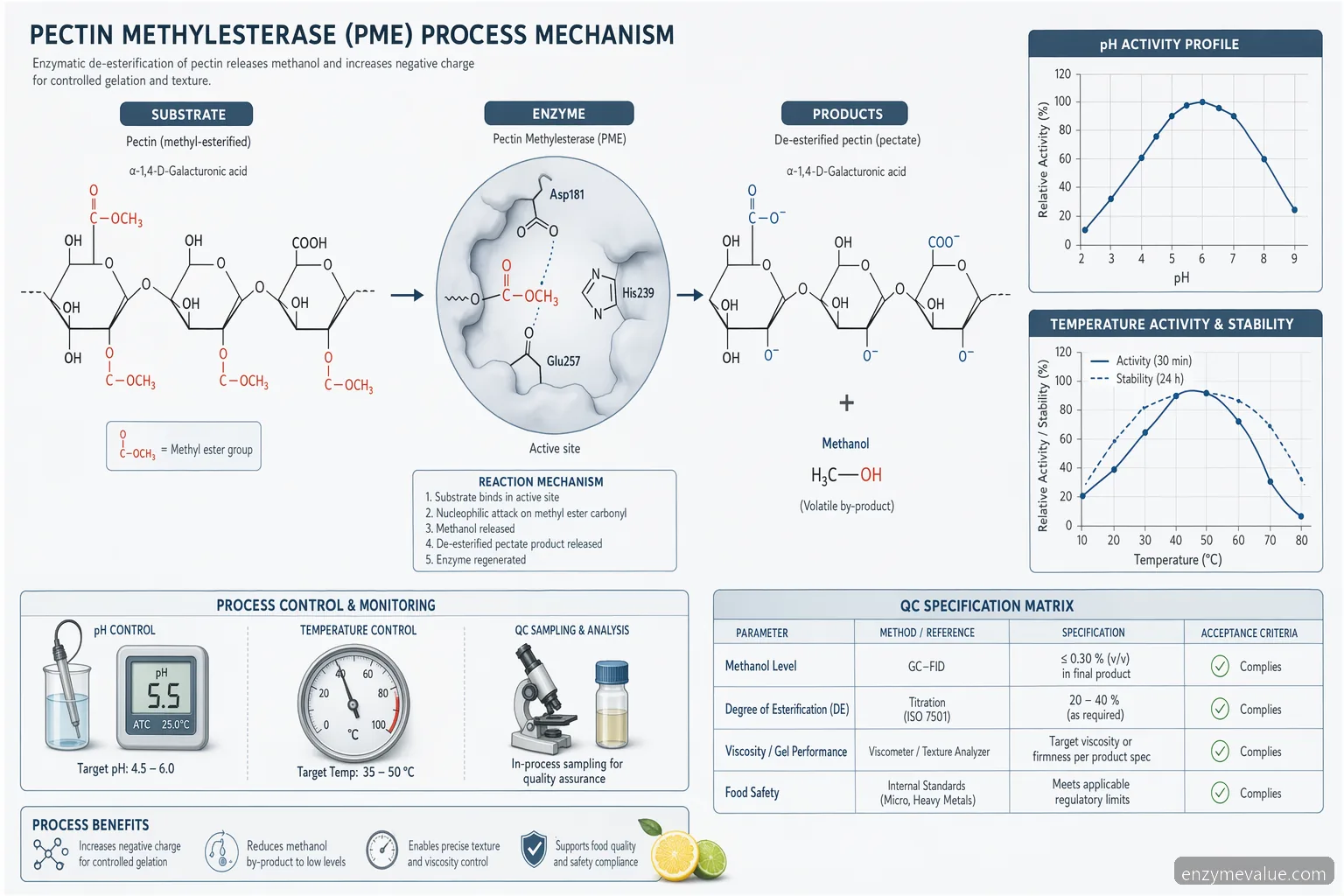
Pectin methylesterase methanol production depends on pectin degree of esterification, enzyme source, dosage, pH, temperature, calcium level, and mixing. A practical screening window is pH 3.5-7.5 and 30-55°C, then narrowing based on the selected PME enzyme and product objective. Many fruit systems operate around pH 3.5-4.5, while some microbial or plant-derived PMEs may show higher activity closer to neutral pH. Pilot trials often start with 10-200 PME activity units per kilogram of pectin-containing material, adjusted for substrate concentration and the supplier’s unit definition. Contact times of 15-120 minutes are common in bench evaluation, but should be optimized by methanol formation rate, viscosity change, and target esterification level. Excessive de-esterification may increase calcium sensitivity, cause unwanted gelation, or reduce juice cloud stability if not paired with the right clarification strategy.
Control pH before dosing; uncontrolled pH drift changes reaction rate. • Maintain uniform mixing to avoid localized over-treatment. • Stop the reaction by heat treatment, pH shift, separation, or downstream processing as appropriate.
Applications in Juice, Jam, and Citrus Peel Processing
Pectin methylesterase in food is used differently depending on the application. In juice processing, especially pectin methylesterase in orange juice, unmanaged PME activity may contribute to cloud loss through pectin de-esterification and calcium bridging. However, controlled enzyme treatment can be part of clarification, viscosity reduction, or integrated pectin modification when combined with pectin lyase, polygalacturonase, or filtration. In jam and fruit preparation, PME can help tune pectin-calcium interactions, but formulators must balance texture, soluble solids, pH, and thermal processing. In citrus peel processing, pectin methylesterase methanol production becomes a measurable part of pectin conversion and peel valorization. The phrase pectin lyase and pectin methylesterase production by Penicillium citrinum appears in technical literature and may be relevant to R&D sourcing discussions, but commercial selection should still depend on lot-specific performance and documentation.
Juice: clarify or manage cloud stability depending on process design. • Jam: adjust pectin reactivity and calcium response with careful dosing. • Citrus peel: support pectin modification, hydrolysis preparation, or byproduct upgrading.
QC Checks for Methanol, Pectin Conversion, and Food Safety
Because methanol is a direct reaction product, any pectin methylesterase methanol process should include analytical controls. Common QC options include gas chromatography for methanol, validated enzymatic methanol kits for rapid screening, titration or FTIR for degree of esterification, viscosity profiling, pH tracking, Brix measurement, and microbial checks for food matrices. Plants should define acceptance criteria before scale-up: target methanol range, residual activity, viscosity endpoint, filtration rate, or final pectin functionality. If a pectin methylesterase inhibitor, heat step, or pH shift is used to limit activity, verify that it reliably stops the reaction under actual plant conditions. For food use, review local regulations and product standards for methanol limits and enzyme processing aids. Documentation should connect raw material lot, enzyme lot, dosage, contact time, analytical results, and release decision.
Methanol: GC is preferred for confirmatory quantification. • Pectin conversion: monitor degree of esterification and viscosity. • Process release: document endpoint, inactivation, and final product compliance.
How to Qualify a PME Enzyme Supplier
Industrial buyers should qualify pectin methylesterase by performance, not only price per kilogram. Request a COA, TDS, SDS, activity assay method, recommended pH and temperature range, allergen or food-contact statements where applicable, storage conditions, and shelf-life guidance. Ask whether the supplied activity is standardized and how lot-to-lot variation is controlled. In pilot validation, compare enzyme candidates at equal activity units, not equal mass, and calculate cost-in-use per ton of substrate or per kilogram of modified pectin. Include hidden costs such as longer residence time, heating, filtration load, methanol testing, yield loss, and wastewater impact. A good supplier should support bench protocols, sample sizing, scale-up interpretation, and troubleshooting without making unsupported performance guarantees. Final approval should be based on reproducible plant trials, documented QC, and procurement risk assessment.
Compare activity units, dosage response, and endpoint consistency. • Confirm documentation before production purchase orders. • Use pilot data to calculate true cost-in-use and operating risk.
Technical Buying Checklist
Buyer Questions
Pectin methylesterase is used to modify pectin by removing methyl ester groups. In production, this can support pectin functionality adjustment, juice clarification strategies, jam texture control, citrus peel valorization, and preparation for further pectin hydrolysis. The process must be controlled because methanol is released during de-esterification and because over-treatment can alter viscosity, gelation, or cloud stability.
Methanol is commonly measured by gas chromatography for confirmatory QC, while validated enzymatic methanol kits may be used for rapid in-process checks. The method should be validated for the specific matrix, such as orange juice, citrus peel extract, jam base, or pectin slurry. Results should be linked with enzyme lot, dosage, pH, temperature, contact time, and degree of esterification.
A pilot plan should test pH, temperature, dosage in defined activity units, substrate solids, calcium level, mixing, and contact time. A practical starting window is pH 3.5-7.5, 30-55°C, and 15-120 minutes. Final conditions should be selected by methanol formation, target pectin conversion, viscosity or texture response, downstream filtration, enzyme inactivation, and cost-in-use.
Not always, but it must be managed. Native or added pectin methylesterase in orange juice can reduce cloud stability when de-esterified pectin interacts with calcium. In other process designs, controlled PME use may support clarification or pectin modification. The right approach depends on whether the product target is stable cloudy juice, clarified juice, concentrate processing efficiency, or pectin-rich byproduct recovery.
Buyers should request a Certificate of Analysis, Technical Data Sheet, Safety Data Sheet, activity assay definition, recommended operating range, storage and shelf-life guidance, and food application statements where relevant. For qualification, also request sample availability, lot consistency information, pilot support, and data needed to calculate cost-in-use. Avoid approving suppliers based only on enzyme price per kilogram.
Related Search Themes
pectin methylesterase methanol, pectin lyase and pectin methylesterase production by penicillium citrinum, pectin methylesterase inhibitor, pectin methylesterase in food, pectin methylesterase, what is pectin methylesterase
Pectin Methylesterase (PME) for Research & Industry
Need Pectin Methylesterase (PME) for your lab or production process?
ISO 9001 certified · Food-grade & research-grade · Ships to 80+ countries
Frequently Asked Questions
What is pectin methylesterase used for in production?
Pectin methylesterase is used to modify pectin by removing methyl ester groups. In production, this can support pectin functionality adjustment, juice clarification strategies, jam texture control, citrus peel valorization, and preparation for further pectin hydrolysis. The process must be controlled because methanol is released during de-esterification and because over-treatment can alter viscosity, gelation, or cloud stability.
How is pectin methylesterase methanol production measured?
Methanol is commonly measured by gas chromatography for confirmatory QC, while validated enzymatic methanol kits may be used for rapid in-process checks. The method should be validated for the specific matrix, such as orange juice, citrus peel extract, jam base, or pectin slurry. Results should be linked with enzyme lot, dosage, pH, temperature, contact time, and degree of esterification.
What conditions should be tested before scaling PME enzyme?
A pilot plan should test pH, temperature, dosage in defined activity units, substrate solids, calcium level, mixing, and contact time. A practical starting window is pH 3.5-7.5, 30-55°C, and 15-120 minutes. Final conditions should be selected by methanol formation, target pectin conversion, viscosity or texture response, downstream filtration, enzyme inactivation, and cost-in-use.
Is pectin methylesterase in orange juice always undesirable?
Not always, but it must be managed. Native or added pectin methylesterase in orange juice can reduce cloud stability when de-esterified pectin interacts with calcium. In other process designs, controlled PME use may support clarification or pectin modification. The right approach depends on whether the product target is stable cloudy juice, clarified juice, concentrate processing efficiency, or pectin-rich byproduct recovery.
What documents should buyers request from a PME supplier?
Buyers should request a Certificate of Analysis, Technical Data Sheet, Safety Data Sheet, activity assay definition, recommended operating range, storage and shelf-life guidance, and food application statements where relevant. For qualification, also request sample availability, lot consistency information, pilot support, and data needed to calculate cost-in-use. Avoid approving suppliers based only on enzyme price per kilogram.
Related: Pectin Methylesterase for Better Texture Control
Turn This Guide Into a Supplier Brief Request a PME sample, COA/TDS/SDS package, and pilot dosing plan for your pectin methylesterase production trial. See our application page for Pectin Methylesterase for Better Texture Control at /applications/pectin-methylesterase-optimum/ for specs, MOQ, and a free 50 g sample.
Contact Us to Contribute