Pectin Methylesterase in Tomato Juice for Industrial Juice Processing
Source PME enzyme for tomato juice processing. Compare dosage, pH, temperature, QC, COA/TDS/SDS, pilot trials, and cost-in-use.
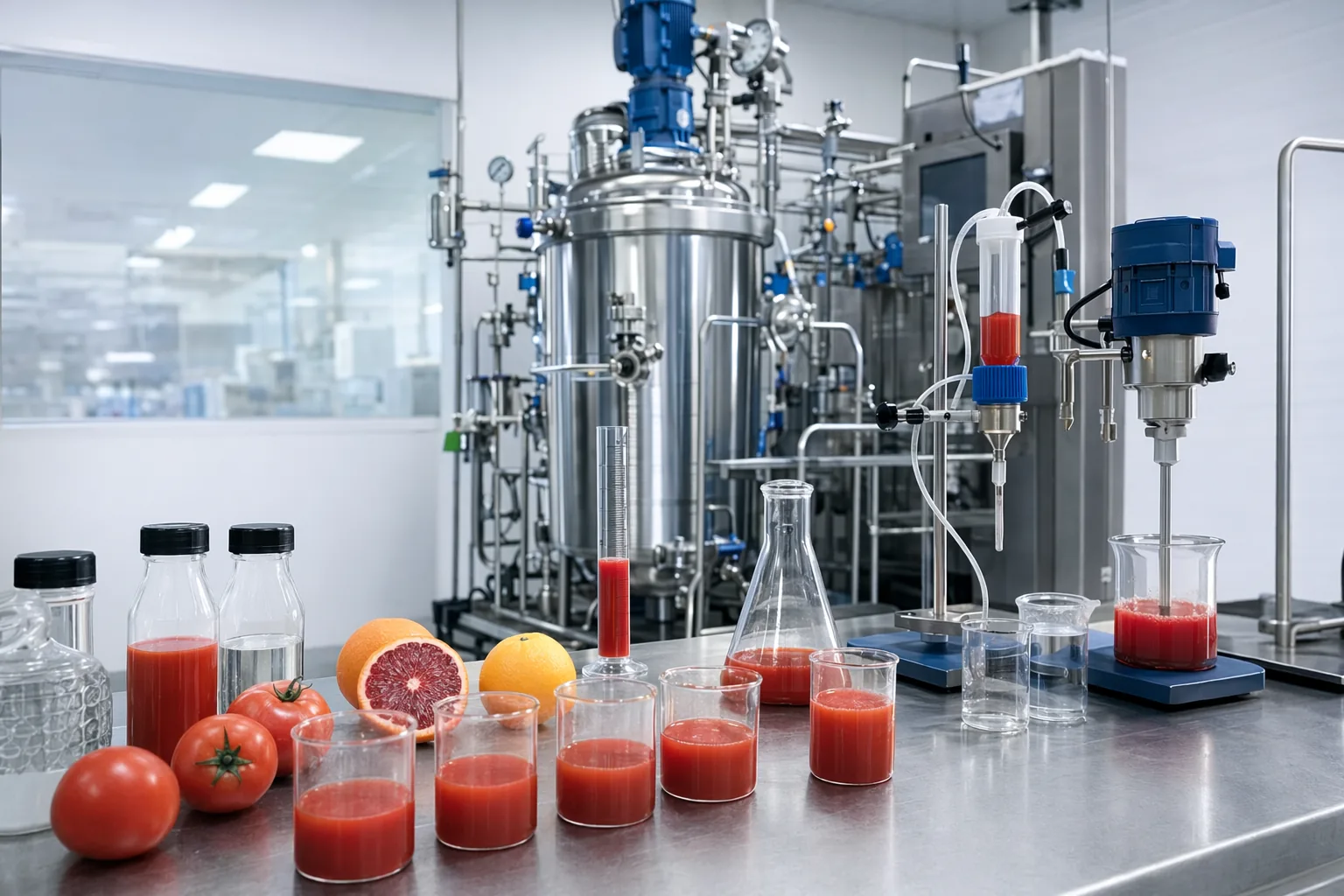
A practical B2B guide for selecting, validating, and sourcing pectin methylesterase for tomato juice and related fruit-processing applications.
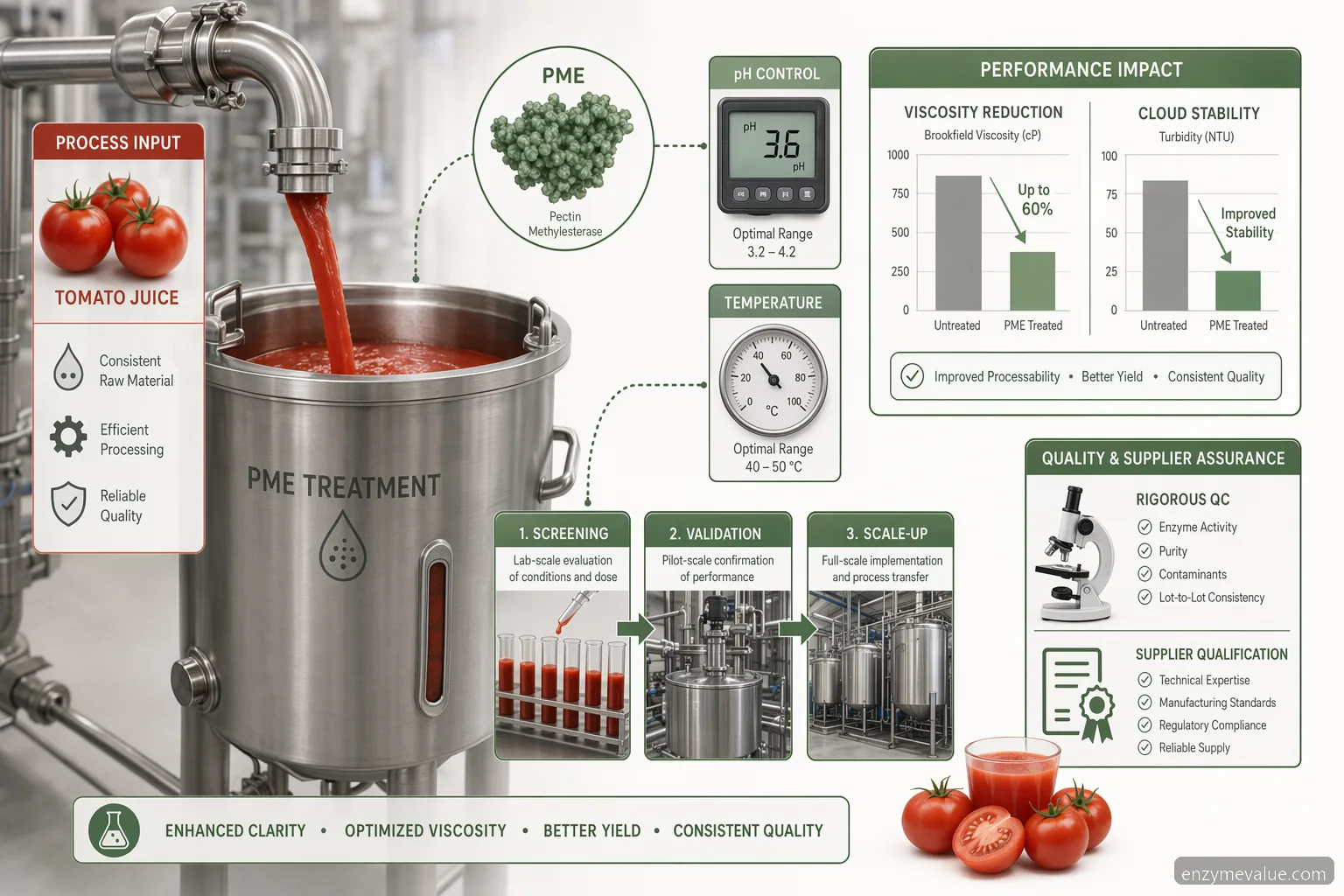
Why PME Matters in Tomato Juice
Pectin methylesterase in tomato juice is used to control how native tomato pectin behaves during extraction, finishing, concentration, and thermal processing. The enzyme, also called PME enzyme, pectin esterase, or de-esterification enzyme, removes methyl ester groups from pectin. This changes charge density, calcium reactivity, viscosity, and susceptibility to downstream pectin-degrading enzymes. In tomato systems, endogenous tomato pectin methylesterase and polygalacturonase can already influence texture and serum separation, so added PME should be evaluated against the raw material, target Brix, pulp level, and finished product specification. For cloudy tomato juice, the goal may be controlled body rather than full clarification. For process streams aimed at lower viscosity or higher yield, PME is often assessed with polygalacturonase or other pectinases in a defined mash treatment.
Primary function: pectin de-esterification • Key effects: viscosity, cloud behavior, pulp stability, extractability • Best use: validated process control rather than generic dosing
Typical Process Conditions for Pilot Screening
For industrial pectin methylesterase juice processing, start with a pilot matrix rather than a single plant-scale trial. Tomato juice usually runs near pH 4.0 to 4.5, while many commercial PME preparations show useful activity across approximately pH 3.5 to 7.0, depending on microbial or plant source and formulation. Screening temperatures commonly fall between 35 and 55 degrees C, with contact times from 15 to 90 minutes. A practical initial dosage band is often 10 to 100 ppm liquid product, or a supplier-defined unit dosage such as PME units per kilogram of mash or juice. Because activity assays are not always equivalent, compare products by measured process outcome, not label dosage alone. Stop reactions with the existing heat step where appropriate and confirm that heating is sufficient for enzyme inactivation.
Screen pH: actual tomato juice pH plus adjusted points if allowed • Screen temperature: 35 to 55 degrees C • Screen contact time: 15 to 90 minutes • Screen dosage: supplier unit basis plus ppm comparison
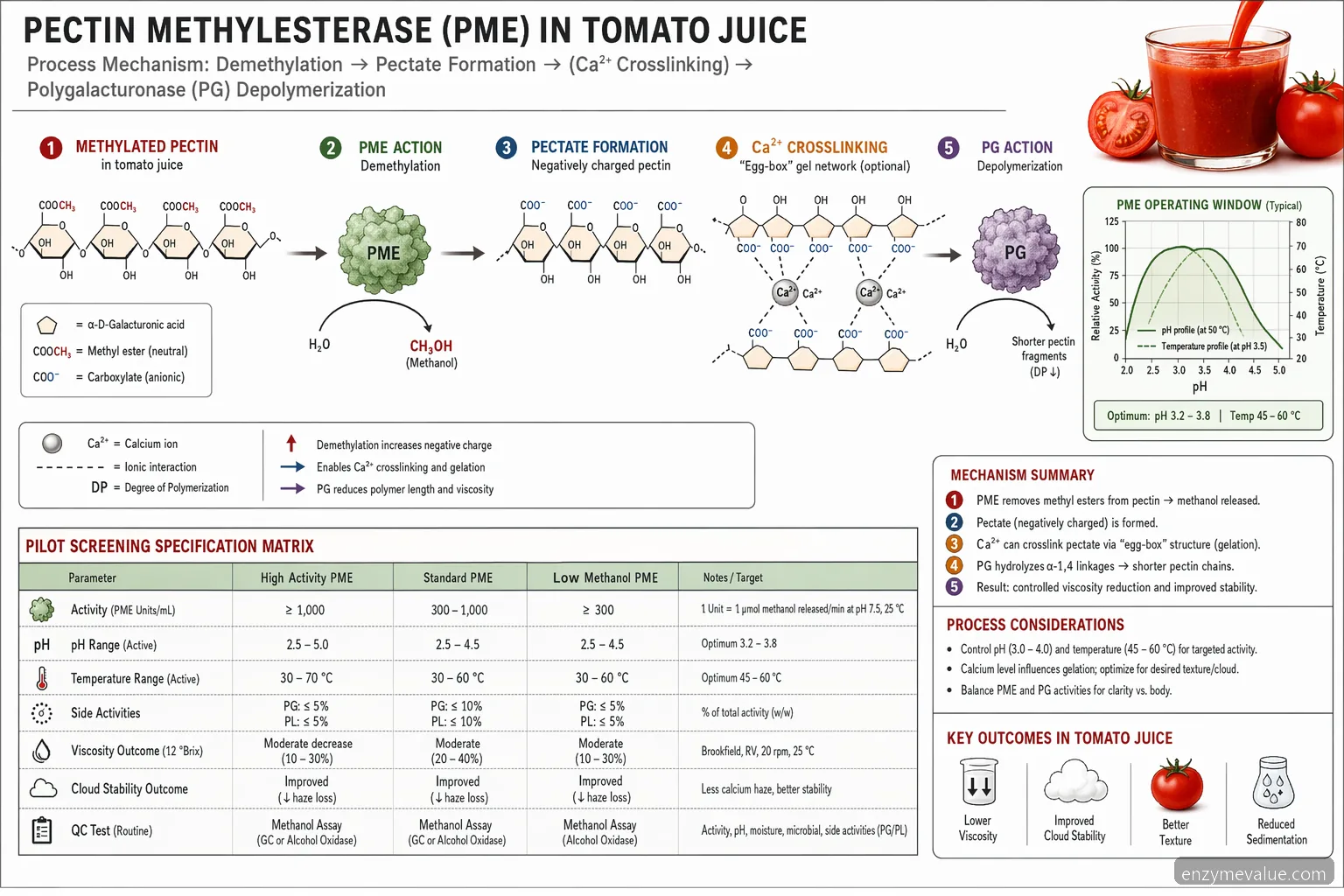
PME with Polygalacturonase in Tomato and Pear Juice
The relationship between tomato pectin methylesterase and polygalacturonase is central to process design. PME creates lower-methoxyl pectin regions, and polygalacturonase can then cleave pectin chains more effectively under suitable conditions. This can help reduce mash viscosity, improve pressing or decanting behavior, and support more consistent filtration in selected processes. The same principle is relevant when evaluating pectin methylesterase and polygalacturonase pear juice applications, although pear pectin, fruit maturity, and juice clarity targets differ from tomato. Buyers should ask whether the supplier recommends PME alone, PME blended with PG, or a broader pectinase system. Blends can simplify dosing but reduce flexibility. Separate enzymes allow tighter optimization, especially when the desired result is viscosity reduction without excessive cloud loss or texture thinning.
PME changes pectin esterification • PG reduces pectin chain length • Separate enzymes give more control than fixed blends • Pilot data should reflect the actual fruit variety and maturity
Lessons from Orange Juice and Citrus Peel Processing
Experience with pectin methylesterase in orange juice is useful, but it should not be copied directly into tomato processing. In citrus, native PME is well known for its role in cloud destabilization when pectin becomes calcium reactive. Therefore, pectin methylesterase orange juice applications often focus on either controlled pectin modification in selected process streams or careful inactivation to protect cloud. Citrus peel processing may use PME as part of pectin modification, peel liquefaction, or by-product valorization workflows, frequently in combination with other pectinases. Tomato juice has different pectin composition, pulp structure, acidity, and sensory targets, so the same PME enzyme can produce different outcomes. A pectin methylesterase supplier for juice processing should explain these differences and help set trial endpoints that match your product specification.
Orange juice learnings are relevant but not directly transferable • Cloud stability must be monitored in citrus and tomato trials • Citrus peel often requires a broader pectinase strategy
Quality Control Checks Before Scale-Up
QC should confirm both enzyme performance and finished juice quality. During trials, measure viscosity, serum separation, cloud stability, pulp distribution, press yield, filtration rate, soluble solids, pH, titratable acidity, color, and sensory impact. If PME is used to support downstream PG activity, include pectin molecular changes or alcohol-insoluble solids testing where available. Calcium sensitivity is important because de-esterified pectin can form networks that either improve structure or create unwanted gelation. Methanol formation is a known result of pectin de-esterification, so processors should ensure finished product compliance with applicable regulations and internal specifications. Record raw material lot, enzyme lot, dosage, temperature profile, residence time, agitation, and heat inactivation conditions. These data make scale-up more reliable and support cost-in-use comparisons between PME enzyme suppliers.
Track viscosity, yield, cloud, and filtration rate • Monitor calcium sensitivity and unwanted gelation • Verify heat inactivation in the actual process • Document enzyme lot and process conditions
How to Qualify a PME Supplier
A qualified pectin methylesterase supplier for juice processing should provide more than a price quotation. Request a current COA, technical data sheet, safety data sheet, allergen or composition statement when relevant, activity definition, assay method, recommended storage conditions, shelf-life guidance, and sample availability. Ask whether the product is liquid or powder, how activity is standardized, what preservatives or carriers are used, and whether the enzyme is suitable for your processing temperature and pH. For purchasing, compare delivered cost-in-use rather than cost per kilogram, because enzyme concentration, activity recovery, handling loss, and dosage can vary widely. Before committing to routine supply, run pilot validation, confirm batch-to-batch consistency, review lead time and packaging, and establish change-notification expectations with the supplier.
Request COA, TDS, SDS, and activity method • Compare cost-in-use, not only unit price • Validate dosage and performance with pilot samples • Confirm packaging, lead time, and storage requirements
Technical Buying Checklist
Buyer Questions
Pectin methylesterase in tomato juice removes methyl ester groups from pectin, changing how pectin interacts with water, calcium, and other enzymes. This can affect viscosity, pulp suspension, serum separation, cloud behavior, and processing yield. The result depends on tomato variety, maturity, pH, heat history, calcium level, contact time, dosage, and whether polygalacturonase is also used.
Yes. PME enzyme, pectin methylesterase, and pectin esterase generally refer to the same de-esterification enzyme function. In purchasing documents, confirm the supplier’s activity definition and assay method because different products may report activity in different units. Also confirm whether the product is a single PME preparation or a blend containing polygalacturonase, pectin lyase, cellulase, or other side activities.
Begin with the supplier’s recommended unit dosage, then build a small pilot matrix across dosage, temperature, and contact time. A common screening band for liquid products may be 10 to 100 ppm, but this is only a starting point because activity strength differs. Judge performance by viscosity, yield, cloud stability, serum separation, and finished product quality rather than enzyme weight alone.
The same pectin methylesterase may be technically active in both orange juice and tomato juice, but the process objective can differ. Pectin methylesterase in orange juice is closely linked to cloud stability concerns, while tomato juice may focus on body, pulp behavior, or viscosity control. Always run product-specific trials at the actual pH, temperature, calcium level, and heat treatment used in the plant.
Request a COA, TDS, SDS, activity definition, assay method, recommended pH and temperature range, dosage guidance, storage conditions, shelf-life, sample availability, and packaging options. For supplier qualification, also ask about lot traceability, change notification, technical support for pilot validation, lead time, and cost-in-use modeling. Avoid comparing products only by price per kilogram.
Related Search Themes
pectin methylesterase in orange juice, tomato pectin methylesterase and polygalacturonase, tomato pectin methylesterase, pectin methylesterase supplier for juice processing, pectin methylesterase orange juice, pectin methylesterase for juice processing
Pectin Methylesterase (PME) for Research & Industry
Need Pectin Methylesterase (PME) for your lab or production process?
ISO 9001 certified · Food-grade & research-grade · Ships to 80+ countries
Frequently Asked Questions
What does pectin methylesterase do in tomato juice?
Pectin methylesterase in tomato juice removes methyl ester groups from pectin, changing how pectin interacts with water, calcium, and other enzymes. This can affect viscosity, pulp suspension, serum separation, cloud behavior, and processing yield. The result depends on tomato variety, maturity, pH, heat history, calcium level, contact time, dosage, and whether polygalacturonase is also used.
Is PME the same as pectin esterase?
Yes. PME enzyme, pectin methylesterase, and pectin esterase generally refer to the same de-esterification enzyme function. In purchasing documents, confirm the supplier’s activity definition and assay method because different products may report activity in different units. Also confirm whether the product is a single PME preparation or a blend containing polygalacturonase, pectin lyase, cellulase, or other side activities.
How should we choose a dosage for tomato juice trials?
Begin with the supplier’s recommended unit dosage, then build a small pilot matrix across dosage, temperature, and contact time. A common screening band for liquid products may be 10 to 100 ppm, but this is only a starting point because activity strength differs. Judge performance by viscosity, yield, cloud stability, serum separation, and finished product quality rather than enzyme weight alone.
Can the same PME be used in orange juice and tomato juice?
The same pectin methylesterase may be technically active in both orange juice and tomato juice, but the process objective can differ. Pectin methylesterase in orange juice is closely linked to cloud stability concerns, while tomato juice may focus on body, pulp behavior, or viscosity control. Always run product-specific trials at the actual pH, temperature, calcium level, and heat treatment used in the plant.
What should we request from a pectin methylesterase supplier?
Request a COA, TDS, SDS, activity definition, assay method, recommended pH and temperature range, dosage guidance, storage conditions, shelf-life, sample availability, and packaging options. For supplier qualification, also ask about lot traceability, change notification, technical support for pilot validation, lead time, and cost-in-use modeling. Avoid comparing products only by price per kilogram.
Related: Pectin Methylesterase for Better Texture Control
Turn This Guide Into a Supplier Brief Request a PME sample, COA/TDS/SDS package, and pilot-use guidance for your tomato juice processing trial. See our application page for Pectin Methylesterase for Better Texture Control at /applications/pectin-methylesterase-optimum/ for specs, MOQ, and a free 50 g sample.
Contact Us to Contribute